- English
- French
- German
- Portuguese
- Spanish
- Russian
- Japanese
- Korean
- Arabic
- Greek
- German
- Turkish
- Italian
- Danish
- Romanian
- Indonesian
- Czech
- Afrikaans
- Swedish
- Polish
- Basque
- Catalan
- Esperanto
- Hindi
- Lao
- Albanian
- Amharic
- Armenian
- Azerbaijani
- Belarusian
- Bengali
- Bosnian
- Bulgarian
- Cebuano
- Chichewa
- Corsican
- Croatian
- Dutch
- Estonian
- Filipino
- Finnish
- Frisian
- Galician
- Georgian
- Gujarati
- Haitian
- Hausa
- Hawaiian
- Hebrew
- Hmong
- Hungarian
- Icelandic
- Igbo
- Javanese
- Kannada
- Kazakh
- Khmer
- Kurdish
- Kyrgyz
- Latin
- Latvian
- Lithuanian
- Luxembou..
- Macedonian
- Malagasy
- Malay
- Malayalam
- Maltese
- Maori
- Marathi
- Mongolian
- Burmese
- Nepali
- Norwegian
- Pashto
- Persian
- Punjabi
- Serbian
- Sesotho
- Sinhala
- Slovak
- Slovenian
- Somali
- Samoan
- Scots Gaelic
- Shona
- Sindhi
- Sundanese
- Swahili
- Tajik
- Tamil
- Telugu
- Thai
- Ukrainian
- Urdu
- Uzbek
- Vietnamese
- Welsh
- Xhosa
- Yiddish
- Yoruba
- Zulu
Welan Gum Supplier Guide: Quality and Purity Considerations
When dealing with rigorous industrial conditions, quality standards are not negotiable when you are obtaining speciality biopolymers. This guide tackles key factors in choosing a source for this high-performance rheology modifier, a Welan Gum biopolymer made by microbial fermentation. It is widely used in oilfield applications, building chemicals, and speciality formulations. The purity, consistency, and reputation of the source must be considered. Procurement managers and technical engineers may reliably pick items that fulfil demanding operational requirements and cost-effectiveness in high-volume applications by reviewing technical features, quality indicators, and procurement methods.

Understanding Welan Gum: Properties and Applications
Essentially, this biosaccharide is created via biochemical fermentation of starch-based feedstocks employing certain bacterial strains of Alcaligenes. The obtained polymer is composed of repeating tetrasaccharide units of D-glucose, D-glucuronic acid, L-rhamnose and L-mannose. This unusual molecular design promotes hydrogen bonding between glycoside rings throughout the polymer chain, considerably boosting solution viscosity and providing remarkable thickening, suspension and water retention properties.
Temperature and Salinity Resilience
This biopolymer retains functional viscosity over 130°C, unlike typical hydrocolloids, and shows excellent stability in high-calcium and high-salinity settings. These qualities make it essential in deep-well drilling fluids, especially when geothermal heat and brine concentrations destroy weaker polymers. The pseudoplastic behaviour, with high viscosity at low shear rates and less viscosity at high shear, provides an efficient suspension during the static phase and pumpability during the active operation.
Versatile Industrial Deployment
This substance is used as a viscosifier and fluid loss control agent in drilling muds in oilfield services to ensure effective cuttings conveyance and wellbore stability. It avoids segregation and bleeding of slurries in severe downhole conditions encountered during cementing operations. Besides energy uses, building experts use it in self-compacting concrete and anti-washout formulas for working underwater. The thixotropic property prevents the aggregate from settling while keeping it workable. Even in speciality coatings and refractory wash coats, the polymer provides consistent suspension of particles and resistance to drooping on vertical surfaces.
Quality and Purity Factors in Supply
Consistent performance starts with knowing key quality characteristics that directly affect functional integrity. In applications where even small contamination might have an adverse effect on the rheological behaviour or cause undesirable responses, purity values of over 98% are important. The repeatability of viscosity depends upon the reproducibility of the molecular weight from batch to batch. It is important for manufacturing exact mud weights or concrete admixtures.
Microbiological and Physical Standards
Rigorous microbiological testing reduces the risk of contamination, which is particularly relevant for pharmaceutical grade materials or when the material will be stored for a long period of time. Loss on Drying (LOD) values are typically controlled to less than 13-15% to prevent microbial growth during storage and to ensure an accurate dose of the active content of Welan Gum. Mesh Size Specifications—typically 80 to 200 mesh—influence hydration rates: finer particles hydrate faster but require proper dispersion to avoid clumping, whereas coarser grades need longer mixing times but minimise the potential for fish-eye formation.
Shelf life and material stability are largely influenced by storage conditions. This powder is hygroscopic and should be kept in sealed containers in a cold, dry area. Humidity exposure leads to partial hydration and clumping, which hinders the uniform dispersion of the material in field applications. Suppliers that provide moisture-barrier packaging in palletised 25kg bags exhibit a grasp of handling needs and minimise on-site preparation problems.
Certification and Compliance Verification
Reputable suppliers are ISO 9000 certified, which means they have a systematic approach to quality control in manufacturing, testing and delivery. Traceability of the raw materials via documentation packages such as Certificates of Analysis (COA), Material Safety Data Sheets (MSDS), and batch-specific test results is crucial for regulatory compliance and quality audits. The documents should contain viscosity profiles at certain shear rates, thermal stability test results, and compatibility verification with typical ions such as calcium chloride, all essential for formulation chemists designing products for the field.
Comparative Analysis: Welan Gum vs Other Hydrocolloids
Understanding performance differences between biopolymer options helps buyers match materials to application demands. Xanthan gum, while widely used for general viscosity enhancement, experiences thermal degradation above 120°C and can precipitate in high-calcium environments—limiting utility in cement systems or deep drilling operations. Guar gum offers cost advantages but lacks the ionic tolerance and thermal stability required for challenging oilfield conditions.
Performance Under Stress
The distinguishing characteristic lies in extreme condition performance. Where xanthan loses functionality in geothermal wells or highly alkaline cement slurries, this specialized biopolymer maintains structural integrity and viscosity control. The three-dimensional network structure provides superior particle suspension without creating unmanageable apparent viscosity, allowing operators to achieve desired fluid properties without sacrificing pumpability or mixing efficiency.
Comparative testing data shows viscosity retention at 150°C where competitive hydrocolloids have already failed. This thermal advantage translates directly to operational cost savings—fewer redrilling incidents, reduced lost circulation events, and improved cement job success rates in demanding formations. Technical teams evaluating drilling fluid programs or specialty construction applications should prioritize materials proven through field testing rather than relying solely on laboratory rheology curves that may not reflect downhole realities.
How to Choose a Reliable Supplier
Choosing the correct supplier partner is much more than just product specs and includes operational dependability, technical support skills, and commercial flexibility. Suppliers with a direct manufacturing connection or vertically integrated production are more in charge of quality consistency and supply chain stability than brokers that deal with different commodity chemicals.
Certification and Manufacturing Transparency
Look for vendors who have proven quality methods for Welan Gum that are in compliance with international standards. ISO 9000 accreditation is the minimum guarantee, but a closer look at the manufacturing agreements shows the ability to customise and support formulations. GMP-approved facilities with state-of-the-art fermentation technology and downstream processing capabilities that cooperate with suppliers enable custom viscosity grades or particle size distributions to meet the unique needs of a given application.
The manufacturing site impacts logistics, lead times, and the difficulty of regulatory compliance. Mature supply networks and knowledgeable technical people are available at established industrial hubs who are well-versed in export paperwork and international shipping regulations. Suppliers that can provide 7-10 day lead times and flexibility in order amounts from sample requests to bulk pallet shipments show operational agility that is helpful when ramping up projects or during emergency supply scenarios.
Communication and Technical Support
Commodity providers are competitive because of responsive technical help. Suppliers give value beyond just delivering a product – they help with formulation direction, compatibility testing support, and field troubleshooting assistance. When field circumstances differ from what was expected in the lab, application engineers with experience in oilfield operations, concrete technology, or speciality coating formulas may help expedite the problem-solving process. This help is especially beneficial when modifying formulations to regional water chemistry changes or to the addition of new performance criteria throughout a project.

When working on multi-site projects or foreign operations, global reach is important. Suppliers with experience supplying customers throughout North America, Europe, and developing regions exhibit logistical expertise and knowledge of different regulatory contexts. Established distribution networks help to avoid customs delays and give local inventory choices that help minimise supply chain interruptions during high demand times.
Procurement Tips: Ensuring Quality and Cost Efficiency
Strategic procurement combines quality demands with budget limits while creating supplier relationships that produce long-term value. By understanding the price dynamics between product grades and order quantities, you may negotiate more effectively. Industrial-grade material for oilfield applications is often less expensive than pharmaceutical or food-grade versions, but with the same performance in drilling fluids or building chemicals where ultra-high purity has little practical value.
The use of sample assessment programs reduces the risk of procurement via validation of material performance before bulk acquisition. Taicheng and other reputable vendors supply samples so formulation chemists may do compatibility testing with current systems and confirm rheological qualities under expected operating circumstances. These trial runs reveal possible issues—dispersion problems, unanticipated interactions with other additives, or departures from planned viscosity profiles—before they impair field operations or manufacturing schedules.
Long-term supplier relationships give cost consistency and preferential treatment in allocation during shortages. Framework agreements with agreed yearly quantities are the key to achieving volume savings, while ensuring supply continuity amid market shortages. These types of collaborations allow for collaborative forecasting with little or no surplus inventory carrying costs and material availability based on project schedules and seasonal demand variances.
Shelf life limits and storage needs must be taken into account in proper inventory management. This may impair performance, increasing waste and disrupting operations. Materials may be held beyond specified durations or in sub-optimal conditions. Managing delivery dates to align with consumption patterns and ensuring correct warehousing conditions (cool, dry, sealed storage) guarantees product integrity and the best possible return on procurement expenditure.
Conclusion
There is more to choosing the correct supplier for Welan Gum than just comparing prices. It is about assessing technical skills, quality systems and commercial dependability. Complete documentation and timely technical support, backed by constant molecular weight in high-purity material, provide you the confidence to operate in challenging applications. We have strategic alliances with suppliers who are ISO certified, flexible on order fulfilment and have a proven track record in the oilfield, construction and speciality chemical sectors that are more than just transactional ties. By concentrating on quality indicators, validating certificates, performing rigorous sample assessments and developing collaborative supplier relationships, procurement experts are able to establish supply chains that enable operational excellence at the right cost.
FAQ
1. What shelf life can be expected under proper storage conditions?
When stored in sealed packaging within cool, dry environments away from direct moisture exposure, this material typically maintains functionality for 24 months from the production date. Humidity exposure causes partial hydration and clumping, compromising dispersion quality and requiring disposal. Always verify production dates on packaging and implement first-in-first-out inventory rotation to minimize age-related degradation risks.
2. How does performance compare to xanthan gum at elevated temperatures?
While both biopolymers provide viscosity enhancement, thermal stability differs significantly. Xanthan experiences rapid degradation above 120°C, losing functional viscosity in deep drilling environments or high-temperature industrial processes. This specialized polymer maintains rheological properties up to 150°C, making it the preferred choice for geothermal wells, deep formations, and applications where sustained thermal exposure occurs. Field data consistently shows superior performance in challenging downhole conditions where temperature and salinity combinations overwhelm conventional hydrocolloids.
3. What mixing procedures prevent fish-eye formation during hydration?
Successful dispersion requires adding powder slowly to the vortex of vigorously stirred liquid rather than dumping material into static water. High shear mixing equipment ensures rapid particle wetting before hydration begins. Pre-blending with dry ingredients like cement or sand provides mechanical separation, preventing agglomeration. Some operators disperse material in non-solvents like glycol before introducing water, achieving uniform distribution without lumping. Regardless of method, thorough mixing until complete dissolution prevents undissolved particles that compromise fluid properties and create quality concerns.
Partner with Taicheng for Premium Solutions
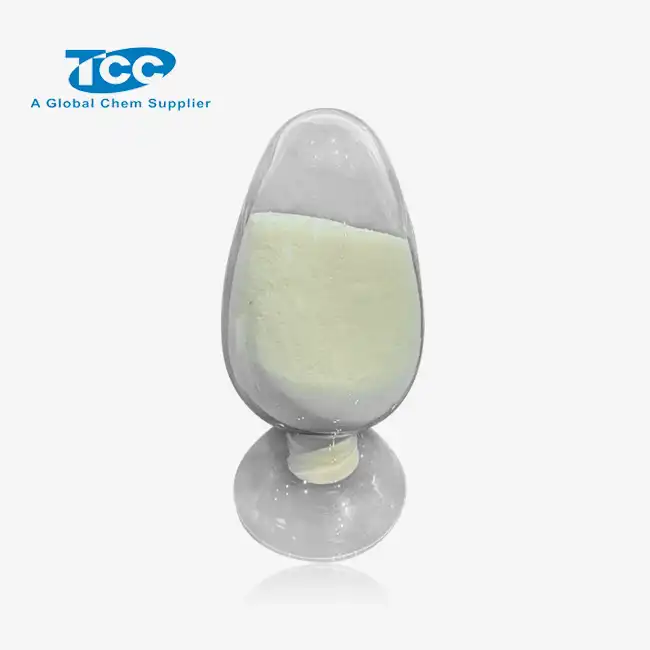
Xi'an Taicheng Chemical has built a solid reputation as a reliable supplier offering high-purity biopolymers specifically engineered for oilfield operations and specialty industrial applications. Our product portfolio includes Types 3810 and 4810 formulations, delivered as off-white to tan powder in moisture-sealed 25kg bags with pallet configurations ensuring handling convenience and material protection during transport and storage.
Operating under ISO 9000 certification with strategic partnerships connecting us to GMP-certified manufacturing facilities, we maintain stringent quality control, delivering batch-to-batch consistency critical for formulation reproducibility. Our technical team provides comprehensive support—from sample provision and compatibility testing guidance to field troubleshooting assistance—ensuring smooth integration into existing systems and optimized performance under actual operating conditions.
With streamlined logistics delivering 7-10 day lead times and global distribution experience serving clients across energy, construction, and chemical processing sectors, we understand the importance of Welan Gum supply reliability to your operational continuity. Whether you require bulk volumes for ongoing drilling programs, customized formulations addressing specific geological challenges, or technical consultation optimizing existing mud systems, our responsive approach and competitive pricing structure support your procurement objectives.
Contact our technical specialists at sales@tcc-ofc.com to request product samples, discuss application-specific requirements, or explore partnership opportunities. We're committed to delivering not just quality materials but strategic support helping your operations achieve technical excellence and commercial success.
References
1. Burdyn, T. & Williams, D. (2018). Biopolymers in Drilling Fluids: Performance and Environmental Considerations. Society of Petroleum Engineers Technical Publications.
2. Chen, L. & Zhang, Q. (2020). Rheology Modifiers in Oilfield Cementing: Comparative Analysis of Polysaccharide Additives. Journal of Petroleum Science and Engineering, 194, 107-118.
3. Hernandez, M. (2019). Quality Control Standards for Industrial Biopolymers: Testing Protocols and Acceptance Criteria. American Chemical Society Industrial Applications Series.
4. Mitchell, R. & Thompson, K. (2021). Advanced Viscosity Management in High-Temperature Drilling Operations. Energy Technology Press.
5. Roberts, P. (2017). Hydrocolloid Selection Guide for Construction Chemicals: Technical and Economic Considerations. International Association of Concrete Technology.
6. Wilson, J. & Patel, S. (2022). Microbial Polysaccharides: Production, Properties, and Industrial Applications. Springer Chemical Engineering Handbook.
Learn about our latest products and discounts through SMS or email