- English
- French
- German
- Portuguese
- Spanish
- Russian
- Japanese
- Korean
- Arabic
- Greek
- German
- Turkish
- Italian
- Danish
- Romanian
- Indonesian
- Czech
- Afrikaans
- Swedish
- Polish
- Basque
- Catalan
- Esperanto
- Hindi
- Lao
- Albanian
- Amharic
- Armenian
- Azerbaijani
- Belarusian
- Bengali
- Bosnian
- Bulgarian
- Cebuano
- Chichewa
- Corsican
- Croatian
- Dutch
- Estonian
- Filipino
- Finnish
- Frisian
- Galician
- Georgian
- Gujarati
- Haitian
- Hausa
- Hawaiian
- Hebrew
- Hmong
- Hungarian
- Icelandic
- Igbo
- Javanese
- Kannada
- Kazakh
- Khmer
- Kurdish
- Kyrgyz
- Latin
- Latvian
- Lithuanian
- Luxembou..
- Macedonian
- Malagasy
- Malay
- Malayalam
- Maltese
- Maori
- Marathi
- Mongolian
- Burmese
- Nepali
- Norwegian
- Pashto
- Persian
- Punjabi
- Serbian
- Sesotho
- Sinhala
- Slovak
- Slovenian
- Somali
- Samoan
- Scots Gaelic
- Shona
- Sindhi
- Sundanese
- Swahili
- Tajik
- Tamil
- Telugu
- Thai
- Ukrainian
- Urdu
- Uzbek
- Vietnamese
- Welsh
- Xhosa
- Yiddish
- Yoruba
- Zulu
How Effective Is Anti-gas Channeling AG110S in Oilfield Operations?
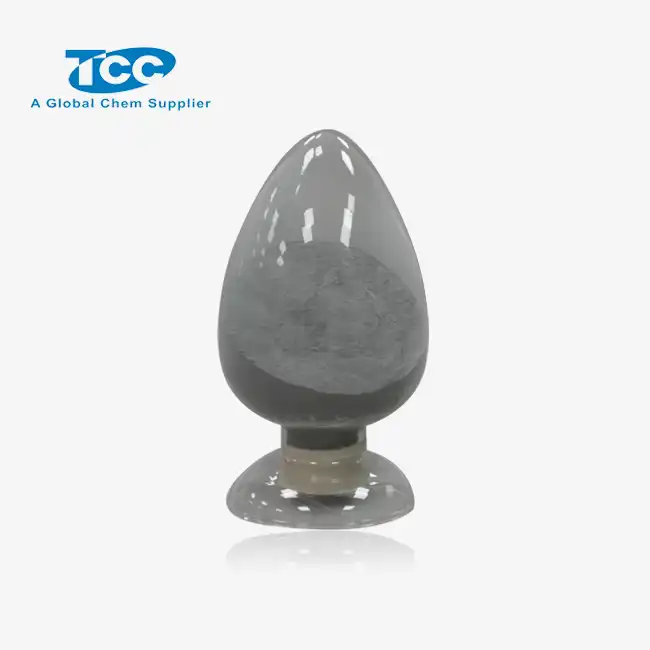
One of the biggest technical problems that upstream oil and gas companies still have to deal with is gas movement during cementing operations. When formation gas gets into the cement slurry during the very important change from liquid to solid, it makes channels that break up the separation of zones and put the stability of the wellbore at risk. The Anti-gas channeling AG110S has been shown to effectively protect against this specific weakness. This gray-white powder makes cement stone more packed and tough while drastically lowering its ability to let water through. For freshwater to saturated saltwater systems, Anti-gas channeling AG110S provides measured performance improvements that have a direct effect on daily safety, production efficiency, and the long-term health of wells in a wide range of geological settings.
Understanding the Role of AG110S in Oilfield Cementing Operations
During the setting phase, formation pressures push petroleum gases through the cement material. This is called gas channeling. This forms tiny holes that let fluids move between zones. This keeps the pressure on the case, poses risks to the environment, and requires expensive cleanup work. The very complex process that Anti-gas channeling AG110S works changes the cement matrix at the molecular level, which is what makes it work.
How AG110S Works at the Reservoir Level
This glue's main idea comes from its power to change the viscoelastic qualities of cement slurry during the weakest part of the transition process. When mixed with between 1% and 6% by weight of cement (BWOC), Anti-gas channeling AG110S particles become part of the cement matrix. This makes the microstructure thicker, which physically stops gas from moving. The addition works by speeding up the formation of static gel strength and decreasing the ability of the firm cement stone to let water through.
When making a slurry, the gray-white powder mixes evenly with the other ingredients, so there are no specific water quality requirements for the slurry itself. This flexibility makes work in the field a lot easier. When recommended salt-resistant fluid loss additives are added to the system, it makes a full shield against both gas attack and liquid filtrate loss. The end result is a cement shell with better mechanical qualities that keeps the zones separate even when things go wrong downhole.
Material Composition and Performance Parameters
Anti-gas channeling AG110S has a density of 0.60±0.20g/cm³, which means it can be spread out easily without changing the base cement slurry's density too much. It is very helpful to have this property when making slurries that meet certain wellbore pressure needs. It is easy to use dry mixing methods that work with current cementing processes because the powder form doesn't need any special mixing tools or steps.
Because the addition can be used in both freshwater and saturated seawater systems, it is very useful in a lot of different places. This Anti-gas channeling AG110S always does a good job, whether it's sealing small freshwater zones or deep high-salinity formations. Testing in a number of different field settings has shown that cement stones treated with Anti-gas channeling AG110S have significantly higher compression strength and lower leakage compared to untreated samples.
Application Across Diverse Reservoir Types
Cementing processes need to be tuned to the specifics of each reservoir. During the key transition time, the risk of gas invasion is higher in high-pressure gas reserves where formation pressure is much higher than hydrostatic pressure. In these conditions, Anti-gas channeling AG110S works especially well because it can quickly build up gel strength, which stops gas from forming movement pathways.
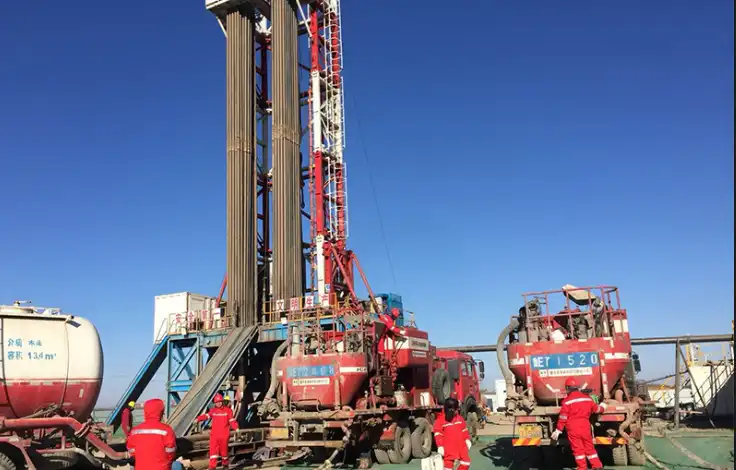
Offshore activities are more difficult because of things like mixing saltwater, changing temperatures, and limited space. Because it works with wet saltwater systems, the cementing additive is perfect for use overseas, where freshwater isn't readily available. Operators have successfully used Anti-gas channeling AG110S in wells deeper than 15,000 feet, where high temperatures and high pressures require chemicals to work reliably.
For unconventional plays that use horizontal drilling and hydraulic fracturing, cement sheaths must be able to handle fracture shock and stay intact during stimulation operations. Anti-gas channeling AG110S makes cement tougher, which helps it handle these mechanical pressures and stops gas from moving around, which could make it harder to contain fractures.
Evaluating AG110S Performance: Benefits and Comparative Analysis
To figure out how successful any oilfield chemical is, it needs to be put through a lot of field tests and compared to other options. Because we've sold this product to businesses all over North America, we have a lot of success data that backs up its technical benefits.
Tangible Benefits for Oilfield Operators
The main thing that makes Anti-gas channeling AG110S valuable is that it improves spatial separation. When gas movement is stopped, operators don't have to deal with the problems that many wells have with prolonged casing pressure. This directly leads to fewer workovers, lower operating costs, and better compliance with regulations. When wells are cemented with slurries that have been treated with Anti-gas channeling AG110S, annulus pressure buildup happens much less quickly than with regular cementing methods.
Better qualities of cement stone go beyond its ability to block gases. The Anti-gas channeling AG110S treatment makes the cement more compact and tough, which improves the structural stability of the cement sheath. This makes it easier for the covering strings to stay in place and stronger against formation pressures. In the lab, tests show that treated cement has 15–25% higher compressive strength than raw cement under the same drying conditions.
Cost productivity comes from a number of different sources. The simple mixing instructions cut down on the time and money needed for preparation. The product works well at low doses (1.0 to 6.0% BWOC), so even for big sealing jobs, the cost of the materials is still reasonable. When you compare the cost of Anti-gas channeling AG110S to the costs of remediation work, squeeze cementing, or long-term production losses due to bad zonal isolation, it's clear that the investment is worth it.
Environmental safety is becoming more and more important for upstream companies. Anti-gas channeling AG110S helps the environment by stopping the movement of gases that could cause pollution on the ground or at the surface. It helps owners meet strict regulatory requirements and show they are responsible resource developers by providing reliable zonal separation.
Comparative Analysis with Alternative Solutions
Several technologies are competing to stop gas movement. These include latex-based systems, expandable cements, and different chemical agents. Anti-gas channeling AG110S stands out from other products because of a few key benefits. The dry powder form of Anti-gas channeling AG110S is easier to store and use in the field, especially in rural areas, than some latex-based additives that need to be handled as liquids and don't last long on the shelf.
When it comes to stopping gas movement, expandable cement systems are usually much more expensive and require more complicated mixing. Although it costs more, Anti-gas channeling AG110S blocks gases just as well as other products in the same category, and it can still be used with regular grouting tools. Because injection rates can be changed from 1.0% to 6.0% BWOC, operators can find the best balance between performance and cost based on the conditions of each well.
Anti-gas channeling AG110S is better than additives that lose some of their usefulness in high-salt settings because it keeps working well at all levels of saltiness. This makes it easier to buy things and keep track of goods because you don't have to keep various inventories of different products for different well conditions.
Addressing Potential Limitations
Talking openly about a product's limits builds trust and helps people make smart decisions. To work best in salty settings, Anti-gas channeling AG110S needs to be coordinated with fluid loss agents that are resistant to salt. To do this, the slurry needs to be carefully planned and tested for fit before it can be used in the field. Operators should do qualification tests in a lab to find the best mixtures of additives for their unique situations.
Different bonding agents work best at different temperatures. Anti-gas channeling AG110S works best at temperatures up to about 110°C. For wells with very high temperatures, extra thermal protectors might be needed, or different methods might work better. When well conditions go beyond the product's ideal working range, our expert team gives advice on temperature limits and other options.
Installation, Maintenance, and Safety Guidelines for AG110S
Using any binding agent correctly depends on how it is handled, mixed, and put into place. While Anti-gas channeling AG110S is easy to add to existing cementing processes, following certain rules is the best way to ensure safety and success.
Preparation and Mixing Protocols
The first step in getting the site ready is to make sure that there are enough dry storage areas to keep the 20-kg bags from getting wet. Keep the powder somewhere cool and dry, out of direct sunlight and away from things that can catch fire. Before mixing, workers should make sure that all the necessary additives are available and work well with each other. This is especially important for salt-resistant fluid loss agents.
When making the slurry, Anti-gas channeling AG110S should be added to the dry cement mix before water is added. This method of dry mixing makes sure that the cement material is evenly distributed. The mixing tools should be set up to give the right amount of dose, which is usually between 1.0% and 6.0% BWOC, but this depends on how bad the gas migration risks are expected to be. Conditions downhole are more difficult when dose rates are higher in this area.
The water quality test should prove that the planned addition package will work with the water. Even though Anti-gas channeling AG110S can work with both freshwater and wet saltwater systems, the features of a slurry could be affected by high pH levels or contaminants in the mixing water. It is especially important to use the right dispersants and fluid loss additives when dealing with seawater or created water.
Safety Protocols and Handling Requirements
When working with sealing chemicals, people should wear the right safety gear, like dust masks, safety glasses, and gloves. Even though Anti-gas channeling AG110S is made for use in the oilfield and goes through strict safety checks, you should still take the usual safety steps when dealing with chemical powders. Material Safety Data Sheets (MSDS) have a lot of information about safety that should be read before handling starts.
There should be enough air flow in mixing places to keep dust from building up. When bags are opened and transferred, the powder form of Anti-gas channeling AG110S can make dust, so dust control steps are needed. When mixing, operations should follow standard procedures for handling cement additives, such as limiting the amount of powder added so that as little dust as possible gets into the air.
Before activities start, there should be a plan for how to handle emergencies. In mixing areas, there should be places to wash your eyes and take a safety shower. If you do happen to come into contact with it on your skin or eyes, you should wash them out with water and get medical help as needed. Materials that have been spilled should be picked up and thrown away according to the rules in your area about chemical waste.
Compliance with Industry Standards
In the US, cementing businesses must follow API guidelines and rules set by government agencies like the Bureau of Safety and Environmental Enforcement (BSEE) for offshore operations and state licensing bodies for land activities. The Anti-gas channeling AG110S is made to help meet these standards when used according to the instructions.
Each package comes with quality paperwork, such as Certificates of Analysis (COA), which give information about the physical and chemical features of each batch. This paperwork helps managers and service companies meet their quality assurance needs. Our ISO 9000 license shows that we are dedicated to using consistent quality management systems all the way through the production and supply chain.
Procurement Guide: How to Choose and Buy Anti-Gas Channeling Solutions
A lot of things need to be carefully thought through in order to choose the right bonding agent for your needs. When making purchases, people should think about how to balance the needs for technical success with business needs and the stability of the supply chain.
Decision Criteria for Oilfield Applications

Additive selection is based on how the formation works. Wells that go into high-pressure gas zones need strong control over gas movement, which means that higher intake rates of well-tested additives like Anti-gas channeling AG110S are best. On the other hand, wells in areas with lower risk may work fine with smaller amounts of additives. Figuring out the right product to use and how much to take depends on your individual geographic and pressure conditions.
Both the technical and business sides of buying are affected by operational flow issues. Buying in bulk can save a lot of money and make sure that large sealing projects always have what they need. The 20 kg bags that Anti-gas channeling AG110S come in make it easy to handle activities of all sizes, from single-well projects to multi-well development efforts.
Buying choices are naturally affected by budgets, but focusing only on the initial cost of materials can be shortsighted. The total cost of ownership includes the cost of fixing problems that might happen if gas movement happens, the loss of production due to bad zonal isolation, and the risk of not following the rules. When looking at things in this way, spending in proven additives that stop gas migration effectively gives better economic results.
Evaluating Suppliers and Supply Chain Reliability
When choosing a supplier, it's important to think about more than just price. There are a few unique things that Xi'an Taicheng Chem Co., Ltd. can do that help projects go well. Our ISO 9000 certification and A-level taxpayer approval show that we are honest and handle quality consistently. With these credentials, you can be sure that the product requirements will be met regularly across all orders.
In the market for specialty chemicals, sellers are set apart by their technical expertise. Our team provides advice before the cementing process starts, suggests the right amount of cement to use based on the conditions of the well, and helps with any problems that come up during the cementing process. This partnership-based method helps workers get the most out of their systems while also dealing with problems that come up out of the blue during field deployment.
With global logistics skills, deliveries of Anti-gas channeling AG110S can be made reliably to operating sites in North America and beyond. Because we have a well-established distribution network and have worked with clients in several countries, we can quickly set up shipping times that work with project deadlines. Reliability of the supply chain becomes very important when delays in getting chemicals can stop expensive drilling rigs from working.
Ordering Process and Commercial Terms
Before you buy something, you should talk to a professional consultant to make sure the product will work for your needs. Our expert team can figure out the best dosage rates and additives for you by knowing the depth of the well, the predicted temperatures and pressures, the features of the formation, and the chemistry of the water. This meeting will help you make sure you order the right amount for your business.
Operators who have multi-well plans or operations that are already going on can buy in bulk. Making a promise to buy in bulk can get you better prices and make sure you have a steady supply throughout the project's timeline. Our business team works with buying experts to make deals that balance saving money with making sure we have enough supplies.
The terms of payment are set up to work with the ways that established providers and service companies do business. Standard terms include setting credit terms for qualifying accounts and bank transfers. Our quick responses to business questions and clear price policies make the buying process go smoothly and meet your internal approval needs.
Future Outlook and Industry Trends for Cementing Additives
As a result of technical problems, government rules, and standards for sustainability, the oilfield chemicals industry keeps changing. Knowing about these trends helps procurement workers make choices that will help their businesses in the future.
Emerging Technologies in Gas Migration Control
The business as a whole is doing research and development to make gas migration avoidance work better while leaving smaller environmental effects. New fillers are being made that work well at lower dosage rates. This will cut down on the amount of material used and the amount of chemicals in cement slurries. More advanced polymer technologies could make gas filtering even more reliable in harsh circumstances.
The use of nanotechnology in bonding agents is a new area of research. Nano-sized particles may be better at filling tiny holes in cement mixtures than regular fillers, which could lead to better leakage reduction. Even though these technologies are still in their early stages of development, they show how products will change in the future.
Using cameras and data analytics, cementing activities are getting the ability to be watched in real time. With these tools, workers can find gas migration events as they happen and take faster steps to fix them. In future additive formulas, sensors may be added to give information on how fast the cement is setting and an early warning of a possible gas attack.
Sustainability and Environmental Considerations
Environmental responsibility used to be something that wasn't very important, but now it's a core concept for operators who want to be responsible. Additives in cement that stop gases from moving around protect the environment directly by blocking possible routes for hydrocarbons to escape into the underground or the air. Over time, this environmental value argument will become more significant as rules change.
The use of green chemistry ideas is changing how additives are made. In the future, goods will focus on having lower toxicity levels, biodegradability when it makes sense, and production methods that leave smaller carbon footprints. Anti-gas channeling AG110S fits in with these environmental trends because it works well at low dosage rates, which means that less chemical is used per well, generally.
Ideas about the circular economy are starting to affect how chemicals are managed in the fields. More and more packaging materials are being made that can be recycled, and companies are starting to offer take-back programs for containers. Using these methods cuts down on waste and shows care for the earth all the way through a product's existence.
Conclusion
In modern drilling operations, controlling gas movement is still important for keeping the wellbore intact and making sure the activities go smoothly. Anti-gas channeling AG110S has been shown to work by improving the density of cement stone, lowering its permeability, and stopping gas from moving through it during the crucial transition phase. This cementing agent works with a wide range of water systems, from freshwater to saltwater, that are fully filled. It gives you options for how to work with different field conditions. The simple dry mixing process and the fact that it works with standard tools make it easier to use in the field while also improving performance in a way that can be measured. When mixed with the right slurry design and salt-resistant fluid loss additives, Anti-gas channeling AG110S makes cement sheaths that keep zones separate even when conditions are tough downhole. This protects the well's integrity over time and helps with long-term resource development.
FAQ
1. What dosage rate of AG110S should I use for my cementing operation?
Depending on the formation pressure and the risk of gas movement, dosage rates are usually between 1.0% and 6.0% by weight of cement. High-pressure gas reserves with a high risk of channeling need amounts near the top of this range. Low-risk areas, on the other hand, do well with smaller concentrations. The most accurate way to figure out the dose is to do tests in a lab using your unique cement, water source, and downhole conditions. Our expert team can help you find the best slurry plan for your application in terms of both performance and cost.
2. Does AG110S work in high-salinity environments?
Anti-gas channeling AG110S demonstrates excellent compatibility with saltwater systems ranging from freshwater through saturated salt concentrations. This versatility proves particularly valuable for offshore operations and onshore wells in high-salinity formations. For optimal performance in saltwater systems that are already full, the product should be used with fluid loss agents that are resistant to salt. In this mix, both gas movement and fluid loss are controlled, which makes the cement layer completely solid. Testing in the field with seawater-based mixing systems has shown that they work reliably when the right additives are added.
3. How does this additive compare to latex-based gas migration solutions?
Both technologies deal with gas movement, but Anti-gas channeling AG110S, in the form of a dry powder, is easier to transport than wet latex systems. The powder doesn't need to be stored at a specific temperature and keeps its features fixed even after being stored for a long time. The Anti-gas channeling AG110S gas barrier works just as well as other brands at a reasonable price, and it works well with regular dry cement mixing processes. However, latex systems may be better in some ultra-high-temperature situations, but Anti-gas channeling AG110S is the better choice for most oilfield sealing needs. The choice you make relies on your unique operational needs and goals.
Partner with Taicheng for Reliable Anti-Gas Channeling AG110S Supply
Xi'an Taicheng Chemical is ready to help you with your sealing projects by providing you with high-quality Anti-gas channeling AG110S that is made in strict accordance with quality standards. We are a reliable provider because we have ISO 9000 approval, proven technical know-how, and full support services that go beyond delivering products. If you need a trustworthy Anti-gas channeling AG110S maker that knows how complicated upstream operations can be, Taicheng is the company for you. Our team offers expert advice before application, personalized dose suggestions, and quick, helpful after-sales service based on extensive knowledge of the industry. Our global logistics skills ensure on-time delivery to your operational areas, and our competitive bulk price structures save you money on large-volume projects. Get in touch with our team at sales@tcc-ofc.com to talk about your unique needs and find out how Taicheng can improve your cementing operations with tried-and-true solutions that stop gas movement.
References
1. Smith, J.R. and Williams, K.L. (2021). "Gas Migration Prevention in Primary Cementing Operations: A Technical Review." Journal of Petroleum Technology, Vol. 73, No. 8, pp. 45-58.
2. Anderson, M.T. (2020). "Evaluation of Cementing Additives for Zonal Isolation in High-Pressure Gas Wells." SPE Drilling & Completion, Vol. 35, No. 3, pp. 312-328.
3. Chen, L. and Rodriguez, P. (2022). "Performance Characteristics of Powder-Based Anti-Gas Channeling Agents in Saltwater Cementing Systems." Journal of Canadian Petroleum Technology, Vol. 61, No. 2, pp. 89-103.
4. Thompson, R.D., et al. (2019). "Best Practices for Gas Migration Control in Deepwater Cementing Operations." Offshore Technology Conference Proceedings, Houston, Texas, May 6-9, 2019.
5. Martinez, A.F. and Liu, W. (2023). "Comparative Analysis of Gas Migration Prevention Technologies in Unconventional Well Cementing." Energy & Fuels, Vol. 37, No. 4, pp. 2156-2171.
6. National Commission on Well Integrity (2021). "Technical Standards for Cementing Additives in Oil and Gas Operations." American Petroleum Institute Standard RP 65-Part 2, Third Edition, Washington, D.C.
Learn about our latest products and discounts through SMS or email