- English
- French
- German
- Portuguese
- Spanish
- Russian
- Japanese
- Korean
- Arabic
- Greek
- German
- Turkish
- Italian
- Danish
- Romanian
- Indonesian
- Czech
- Afrikaans
- Swedish
- Polish
- Basque
- Catalan
- Esperanto
- Hindi
- Lao
- Albanian
- Amharic
- Armenian
- Azerbaijani
- Belarusian
- Bengali
- Bosnian
- Bulgarian
- Cebuano
- Chichewa
- Corsican
- Croatian
- Dutch
- Estonian
- Filipino
- Finnish
- Frisian
- Galician
- Georgian
- Gujarati
- Haitian
- Hausa
- Hawaiian
- Hebrew
- Hmong
- Hungarian
- Icelandic
- Igbo
- Javanese
- Kannada
- Kazakh
- Khmer
- Kurdish
- Kyrgyz
- Latin
- Latvian
- Lithuanian
- Luxembou..
- Macedonian
- Malagasy
- Malay
- Malayalam
- Maltese
- Maori
- Marathi
- Mongolian
- Burmese
- Nepali
- Norwegian
- Pashto
- Persian
- Punjabi
- Serbian
- Sesotho
- Sinhala
- Slovak
- Slovenian
- Somali
- Samoan
- Scots Gaelic
- Shona
- Sindhi
- Sundanese
- Swahili
- Tajik
- Tamil
- Telugu
- Thai
- Ukrainian
- Urdu
- Uzbek
- Vietnamese
- Welsh
- Xhosa
- Yiddish
- Yoruba
- Zulu
How Does Calcium Carbonate Powder Improve Plastic Processing Efficiency?
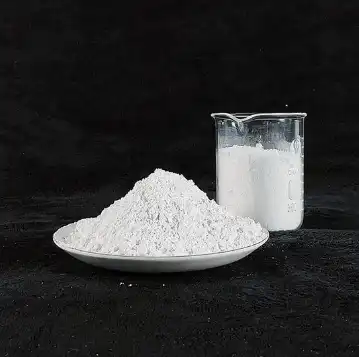
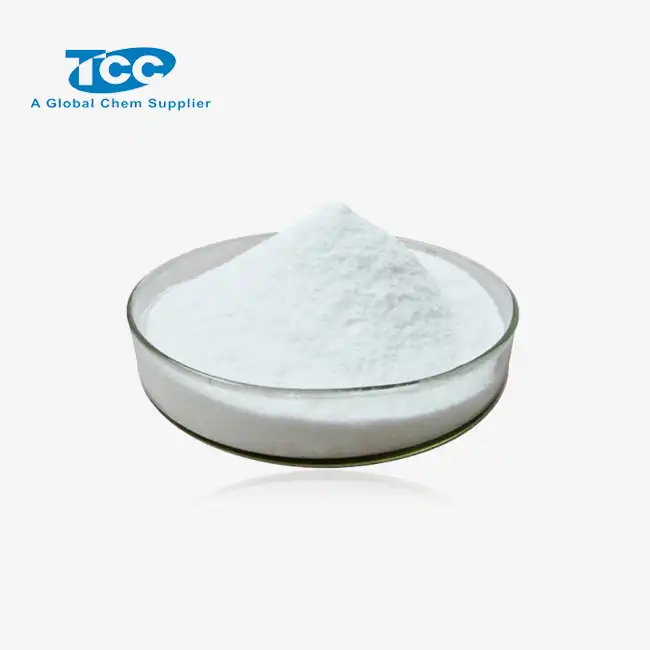
As a high-performance filler that changes the dynamics of processes and the results of products, Calcium Carbonate powder has become essential in the plastics industry. Incorporating this mineral additive into polymer mixtures in a smart way helps makers get faster cycle times, better mechanical qualities, and lower resin costs, all while keeping costs low. This white to light brown powder (CAS No. 471-34-1, chemical formula CCaO3) does more than just add volume; it also changes how plastic is made and fixes important problems, such as controlling melt viscosity and making plastic more stable in its shape.
Understanding Calcium Carbonate Powder in Plastic Processing
Mineral fillers are very important to the plastics industry because they help match performance needs with cost concerns. The two main types used in polymer applications are ground Calcium Carbonate powder (GCC) and precipitated Calcium Carbonate powder (PCC). GCC comes from mines of limestone or marble and is mechanically ground to a certain particle size. Chemical synthesis makes PCC, which has controlled crystal structures and a smaller particle range.
Chemical Properties That Matter
The chemical structure CCaO3 gives it a Mohs hardness of 3.0, which means that working tools like extruders and injection molding dies will be less likely to wear down. This feature makes machines last longer and lowers the cost of upkeep. Purity levels above 98.5% CaCO3 content ensure uniform performance across production runs, which is very important for makers who care about quality and have to work with tight tolerances.
Physical Characteristics Driving Performance
Processing activity is largely determined by the spread of particle sizes. Ultrafine grades with D50 values below 2 microns allow for better dispersion in polymer matrices, which makes smooth surface finishes that are needed for electronics and car parts. When it comes to making PVC pipes, where saving money is more important than looking good, coarser types around 325 mesh (45 microns) work best.
With whiteness values between 90% and 97%, expensive titanium dioxide dyes can be partially replaced in colored plastics. This replacement gives you the same level of clarity and brightness while cutting the cost of raw materials by a large amount. When you treat the surface with stearic acid, it changes particles that like water into particles that don't like water. This makes them much more compatible with organic polymer chains and stops them from sticking together during mixing.
Types and Their Distinct Advantages
PCC has designed crystal morphologies like aragonite, calcite, and vaterite, and each one gives the material its own set of qualities. In polypropylene shields, sclerenohedral PCC crystals make them more resistant to impact, and in polyethylene film uses, rhombohedral forms make them more rigid. GCC is still the workhorse for large uses where controlled shape is less important than cost-effectiveness. By knowing these differences, procurement teams can make sure that the features of the filler exactly meet the needs of the application. This way, costs don't go up or down, and performance isn't affected.
Identifying the Challenges in Plastic Processing Efficiency
Plastic makers are under more and more pressure to speed up production while keeping quality standards high and costs low. Processing mistakes show up as long cooling processes, lots of waste, and products of different sizes, all of which have a direct effect on profits.
Cycle Time Bottlenecks
Parts with thick walls keep heat in longer than wanted, which slows down the cooling phase of injection molding processes. When cooling takes longer, fewer shots can be made per hour, which limits how much the machine can be used and how much it can produce. When melt temperatures stay high, extrusion methods also have problems because they need longer die lengths or more cooling zones, which raises the cost of capital equipment.
Material Waste and Scrap Generation
When melt viscosity isn't uniform, flow becomes unstable, which leads to short shots, sink marks, and warpage flaws. These quality problems mean that the product has to be reworked or thrown away, which directly uses up money for materials and labor. Parts that don't fit within the tolerances set by specifications are made when dimensions change after the mold is cooled. This is especially a problem for medical devices or precision engineering parts that need to be precise.
Mechanical Property Limitations
Pure cement mixtures don't always have the hardness or heat deflection temperatures needed for tough jobs. For price-conscious markets, engineering plastics are still too expensive, leaving a gap between performance and cost that normal common resins can't fill. Adding fillers to fix these problems has been shown to work in the past, but if you don't choose the right additives, they could hurt other qualities like impact strength or surface gloss, switching one problem for another.
How Calcium Carbonate Powder Optimizes Plastic Processing Efficiency
Strategically adding mineral fillers changes the costs and efficiency of polymer processes in a big way. These improvements are made possible by Calcium Carbonate powder through changes in the polymer matrix's temperature, rheological, and structural properties.
Accelerated Processing Cycles
Adding Calcium Carbonate powder at amounts between 20% and 60% makes the heat conductivity a lot better compared to melts made of pure polymer. This better heat transfer speeds up the cooling process during injection molding, which usually cuts cycle times by 15% to 25%. When solidification happens faster, it's possible to make more with the equipment that's already there. This means that capacity can be increased without having to buy new equipment.
Semi-crystalline plastics like polypropylene and polyethylene crystallize faster when carbonate particles act as nuclei. Around material surfaces, crystalline domains form more quickly, which speeds up the change from a melt to a solid state. This effect is very helpful in thick-section shaping, since core areas would stay liquid for a long time after the top sections harden.
Rheology Modification for Better Flow
The behavior of melt viscosity is directly affected by the particle size and loading concentration. When surfaces are properly handled and there are modest loads, Calcium Carbonate powder can lower the viscosity even at high shear rates that are common in injection filling. This shear-thinning property makes mold filling go faster, so processors can lower injection pressures or fill complicated shapes that would otherwise trap air or show incomplete packing.
When the surface is treated with stearic acid, it forms slip planes between the polymer chains and the material particles. These surfaces lower the friction between molecules, which lowers the energy needed to start flow. Some useful benefits are lower screw motor voltage, lower barrel temperatures to get the same flow rates, and less wear on injection units, all of which save energy and make equipment last longer.
Mechanical Property Enhancement
Fillers don't just weaken polymer qualities as some people think; the right Calcium Carbonate powder grades actually make certain mechanical properties better. Flexural modulus readings show that stiffness goes up in a straight line as filler content goes up. Applications that need dimensional stability under load gain a lot. For example, housings for home appliances that need to resist bending or internal panels for cars that need to keep their shape across a wide range of temperatures.
When you use nano-sized PCC or GCC treated with a binding agent, the impact resistance stays the same or even gets better, which is often a problem with solid fillers. It is important to get a good spread and strong interfacial binding between the matrix and filler. When particles blend together smoothly instead of concentrating stress, they can use controlled microcracking processes to take in and release impact energy.
Cost Reduction Through Resin Displacement
One of the most appealing benefits right away might be the straight decrease in material costs. When compared to common plastics like polypropylene or polyethylene, Calcium Carbonate powder usually costs 70% to 85% less per kilogram. If you replace 30% to 40% of the resin volume with the right filler grades, you can save a lot of money while still getting good performance for most non-structural uses.
This economic gain goes beyond the price of raw materials. That means less energy is used per part made because less cooling is needed. When rounds are faster, workers are more productive because they can handle more work in the same amount of time. These cumulative benefits change the economics of the industry. This is especially important in competitive markets where pressures on margins keep rising.
Comparing Calcium Carbonate Powder Types and Their Impact on Plastics
To make a procurement choice, you need to carefully look at a lot of different technical and business factors. There are many different grades of carbonate that need to be matched with structured choice factors in order to meet the needs of the application.
Particle Size Distribution Analysis
Fine particles smaller than 5 microns make surfaces smooth and keep their gloss well, which is important for surfaces that people can see on consumer goods. Medium grades, ranging from 5 to 20 microns, strike a good mix between cost and good spread for semi-structural parts. Coarse types above 20 microns are best for uses where the look of the surface is less important, and they also save you the most money because they cost the least per kilogram.
The range of particle sizes is just as important as the typical number. Narrow ranges pack better, so they can handle higher loads before the viscosity gets too high. There is a troublesome tail of big particles in wide distributions that cause surface flaws in thin-wall molds or blown films, which means that more screening steps are needed, which costs more.
Natural vs. Synthetic Comparison
Because GCC mining depends on geological layers, the composition changes a little from quarry to quarry, even though the base purity is very high. Because of this natural variety, quality must be closely watched, and formulations must be changed from time to time when supply sources change. PCC synthesis takes place in controlled industrial settings, which makes batch-to-batch stability very high and makes planning production and making sure quality easier.
Environmental concerns are becoming more and more important in buying choices. GCC needs a lot of energy to grind, but it doesn't need any chemical processes. PCC synthesis uses energy and chemicals, but it also makes use of waste streams. For example, some makers use industrial CO2 emissions as a carbon source, which creates a green story that brands that care about the environment value.
Cost arrangements are very different. In absolute terms, GCC is still cheaper, which makes it the best choice for apps that care about price. The higher price of PCC is due to its better performance in challenging uses where consistency and unique shapes are worth the extra cost.
Alternative Filler Comparisons
In many plastics, Calcium Carbonate powder is used instead of talc, kaolin clay, glass fibers, and other natural fillers. While talc has higher aspect ratios, which are good for stiffness, it is also more abrasive and less white. Glass threads are a great way to strengthen materials, but they are very expensive and make materials brittle and uneven. While kaolin has a very smooth surface, it is not as opaque or cost-effective as carbonates.
These similarities show that Calcium Carbonate powder has a special value: it has the best performance, processability, and cost-effectiveness. There isn't a perfect filler for every job, but carbonates meet the most needs in both common and industrial thermoplastics, which is why they have the biggest market share.
Selecting and Procuring the Right Calcium Carbonate Powder for Plastic Processing
It's not enough to just list technical requirements for sourcing to be successful; you also need to think about the supplier's skills, quality processes, and prospects for partnership. Because the material is so important to the economics of production, buying should get strategic attention instead of practical commodity management.
Quality Certification Requirements
Industrial-grade standards are enough for uses that don't involve food, like building materials or industrial parts. For uses with food, you have to follow FDA rules or EU Regulation 10/2011, which says that heavy metals like lead, cadmium, and mercury must be tested using an ICP-MS to make sure they are below strict limits. For pharmaceutical plastics packaging, you might need even more detailed paperwork, like DMF files and the ability to fully track the goods through the supply chain.
ISO 9001 approval sets the standards for quality control. Some of the best sellers have extra certifications, like ISO 14001 for environmental management or OHSAS 18001 for worker safety. These show that the company is mature in more ways than just meeting product requirements.
Technical Support and Documentation
Particle size distribution graphs, not just D50 numbers, should be included in full technical data sheets. The numbers for oil absorption show the features of resin consumption. By measuring specific surface areas with BET analysis, we can guess how the spread will behave. Activation rates measure how well a surface treatment works.
Reliable providers help with application development by conducting compounding trials to find the best amounts of loading and processing conditions. Value-added partners are different from commodity sellers because they have access to skilled expert staff who understand polymer science, not just mineral characteristics. This knowledge is very helpful when making new products or fixing problems with output.
Logistics and Supply Chain Considerations
For moving bulky items, the right equipment is needed. Pneumatic conveying systems, silo storage, and loss-in-weight feeds are all big expenses that make it better to stick with the same provider than to move suppliers often. Supply dependability is very important—shutting down a production line because of a lack of materials costs a lot more than any savings that might come from buying things on the spot.
Being close geographically cuts down on transportation costs and wait times while making exchanges with technical help easier. Regional distribution sites that keep popular types in stock make it easy to respond quickly to changes in demand. Supply security is improved by global sellers with multiple production sites that offer different ways to get goods if there are problems in one area.
Price Evaluation Beyond Unit Cost
The lowest price usually doesn't show the real economic best value. Consistent quality cuts down on scrap and process changes, which saves money that is much greater than small price differences. Better dispersion properties might allow for higher loading levels, which would further reduce the need for expensive glue. Shorter development cycles and faster time-to-market for new goods are both benefits of better technical help.
Most of the time, volume agreements open up tiered price structures. Accurate forecasting and consistent orders make it easier for suppliers to plan their production, which often leads to better business terms. Long-term contracts with price stability terms protect both parties from changes in the prices of raw materials and help them work together in ways that go beyond transactions.
Case Studies: Real-World Examples of Improved Plastic Processing Efficiency
The benefits of theory gain respect when they are shown to work in real life. Here are some examples of changes that can be measured thanks to planned carbonate filler optimization.
Injection Molding Cycle Reduction
A North American company that makes plastic interior trim pieces for cars had trouble taking on more work because of limited capacity. Long approval processes were needed for equipment purchases, which put businesses at a competitive disadvantage. The scientific team looked at different ways to change the formula, going from 20% regular GCC to 35% surface-treated, fine-particle Calcium Carbonate powder.
Results were better than expected. Because the time it takes to cool down was cut by 18%, the number of parts made per shift went from 520 to 615. The higher filler loads cut material costs by $0.23 per part at the same time, which is a big savings when you consider that over 2 million units are made every year. Impact tests showed that the treated filler stayed tough enough, and failure rates even went down because the part's density was more evenly distributed. This example shows how choosing the right filler can help with three goals at once: increasing capacity, lowering costs, and raising quality, all without having to spend a lot of money.
Extrusion Throughput Enhancement
A European company that makes pictures about farming mulch tried to lower its costs because there was a lot of price competition. The old mixtures had 25% Calcium Carbonate powder with particles that were about 12 microns in size. The company tried ultrafine grades below 5 microns with the best surface treatment while working with their provider.

At first, the smaller particle size caused processing worries about spread and possible line clogs. When the right screw configurations and temperature profiles were found, controlled studies showed that these worries were false. Because the melt flowed better, production speeds went up by 12%, which directly increased output. More importantly, the better visibility of small particles meant that 40% less expensive white pigment was needed, which cut color costs by a lot. The product's success in field use stayed the same, which kept customers happy and improved profit profiles. This shows how important it is for providers and processors to work together technically to find hidden performance benefits.
Quality Improvement in Precision Applications
A medical device contract maker that made injection-molded plastic housings had trouble with inconsistent sizes, which made assembly difficult. When there was warpage after ejection, rejection rates were close to 8%, which was not acceptable because of tight limits and the need for regulatory paperwork. The main reason was that the thick and thin parts cooled at different rates.
The engineering team looked into adding filler to improve heat transfer and lower mold shrinkage. At 15% loading, medical-grade Calcium Carbonate powder that meets biocompatibility standards was added. Because crystalline polycarbonate is flexible, the nucleation effect didn't matter. However, better thermal conductivity led to more even cooling. Warpage went down by 65%, and failure rates dropped below 2%. The extra benefit of lower material costs helped balance out the extensive validation testing needed for medical applications. This shows that performance improvements can sometimes support the need for thorough qualification efforts.
Conclusion
For improving the speed of plastic processing in a variety of uses, Calcium Carbonate powder is a tried-and-true, low-cost option. Manufacturers can cut down on cycle times, lower material costs, and improve product quality all at the same time by using strategic selection based on particle size, surface treatment, and morphology. By learning about the differences between GCC and PCC, reviewing providers based on more than just price, and studying written case studies, procurement pros can make smart choices that lead to real improvements in operations. As environmental standards rise and competition gets tougher, it's more important than ever to have optimized filler strategies to keep industry competitive in global markets.
FAQ
1. What is the optimal loading percentage for calcium carbonate in plastic formulations?
How much Calcium Carbonate powder should be added to plastic formulas for the best results? The loading amounts depend on the polymer type and the needs of the product. For common uses, like PVC lines, 40% to 60% loadings are common and save the most money. For engineering uses that need precise mechanical properties, loadings are usually limited to 15% to 30% to keep the impact strength and size accuracy. The key is to find a balance between the economic benefits and the efficiency needs of each end use.
2. Does mineral filler addition compromise the recyclability of plastic products?
Filled plastics can still be recovered, but the presence of inorganic content may limit the uses of reclaimed material. Mineral fillers don't break down polymer chains chemically, so filled resins can be recycled mechanically without any problems. Due to its past of processing rather than its filler content, recycled material might be suitable for less demanding uses.
3. How does surface treatment affect carbonate performance in plastics?
If you don't treat calcium carbonate, its hydrophilic surfaces won't work with hydrophobic polymers, which makes it hard to disperse and causes it to clump together. The stearic acid layer makes surfaces that don't absorb water easily mix with polymer melts, which lets more polymer melts stick to the surface and improves its properties. This change to the surface is a key step in adding value that sets top types apart from commodity materials.
Partner with Taicheng for High-Performance Calcium Carbonate Solutions
Xi'an Taicheng Chemical can help you improve the way you process plastic by giving you industrial-grade Calcium Carbonate powder that is backed by ISO9000 approval and a lot of technical know-how. Our white to light beige powder (CAS No. 471-34-1) is used in a wide range of polymer uses outside of our main area of expertise in oilfield chemicals. We do this by forming smart relationships with GMP-certified makers who have the latest processing tools. Our experienced team provides quick help that is geared to your specific needs, whether you need specific particle size distributions, custom surface treatments, or technical advice for formulating new products.
We are a reliable provider of Calcium Carbonate powder to businesses in North America, Europe, and emerging countries. Our competitive prices come from our efficient buying networks and ability to handle large volumes. Strict quality control makes sure that each batch is the same. Email our team at sales@tcc-ofc.com to talk about your unique needs, get detailed data sheets, or set up a sample review. We offer the relationship method, quality verification, and global logistics know-how that are needed for long-term partnerships to work well in plastic processing applications.
References
1. Rothon, R. N. (2017). Fillers for Polymer Applications. Springer International Publishing, Polymers and Polymeric Composites: A Reference Series.
2. Xanthos, M. (2010). Functional Fillers for Plastics, 2nd Edition. Wiley-VCH Verlag GmbH & Co. KGaA.
3. Wypych, G. (2016). Handbook of Fillers, 4th Edition. ChemTec Publishing.
4. Murphy, J. (2001). Additives for Plastics Handbook, 2nd Edition. Elsevier Advanced Technology.
5. Vasile, C. and Pascu, M. (2005). Practical Guide to Polyethylene. Rapra Technology Limited.
6. Kulshreshtha, A. K. and Vasile, C. (2002). Handbook of Polymer Blends and Composites, Volume 4C. Rapra Technology Limited.
Learn about our latest products and discounts through SMS or email