- English
- French
- German
- Portuguese
- Spanish
- Russian
- Japanese
- Korean
- Arabic
- Greek
- German
- Turkish
- Italian
- Danish
- Romanian
- Indonesian
- Czech
- Afrikaans
- Swedish
- Polish
- Basque
- Catalan
- Esperanto
- Hindi
- Lao
- Albanian
- Amharic
- Armenian
- Azerbaijani
- Belarusian
- Bengali
- Bosnian
- Bulgarian
- Cebuano
- Chichewa
- Corsican
- Croatian
- Dutch
- Estonian
- Filipino
- Finnish
- Frisian
- Galician
- Georgian
- Gujarati
- Haitian
- Hausa
- Hawaiian
- Hebrew
- Hmong
- Hungarian
- Icelandic
- Igbo
- Javanese
- Kannada
- Kazakh
- Khmer
- Kurdish
- Kyrgyz
- Latin
- Latvian
- Lithuanian
- Luxembou..
- Macedonian
- Malagasy
- Malay
- Malayalam
- Maltese
- Maori
- Marathi
- Mongolian
- Burmese
- Nepali
- Norwegian
- Pashto
- Persian
- Punjabi
- Serbian
- Sesotho
- Sinhala
- Slovak
- Slovenian
- Somali
- Samoan
- Scots Gaelic
- Shona
- Sindhi
- Sundanese
- Swahili
- Tajik
- Tamil
- Telugu
- Thai
- Ukrainian
- Urdu
- Uzbek
- Vietnamese
- Welsh
- Xhosa
- Yiddish
- Yoruba
- Zulu
How Does 1,3-Dichloro-5,5-dimethylhydantoin Powder Improve Water Safety?
Getting rid of bacteria successfully is important for industrial water systems. This problem can be fixed by 1,3-Dichloro-5,5-dimethylhydantoin powder, which slowly releases hypochlorous acid, a strong germ killer. This solid sanitizer doesn't break down quickly like bleach or liquid chlorine does. Instead, it keeps the chlorine levels high. In cooling towers, industrial water systems, and aquaculture settings, this stops the growth of bacteria and pathogens. Its controlled oxidation process keeps the water clean without causing rapid concentration spikes that could hurt sea life or damage equipment. Because of this, it is a good choice for businesses that need to get rid of germs and make systems last a long time.
Understanding 1,3-Dichloro-5,5-dimethylhydantoin Powder
People who clean water for a living always have to find a way to balance strong cleaning with keeping the system safe and following the rules. Some hand sanitizers don't always do a good job. For example, bleach liquid breaks down quickly, chlorine gas can be dangerous to handle, and many other things don't work when the pH level is high. A molecule called 1,3-Dichloro-5,5-dimethylhydantoin powder was made to solve these issues because it is steady and can kill many types of germs.
Chemical Structure and Release Mechanism
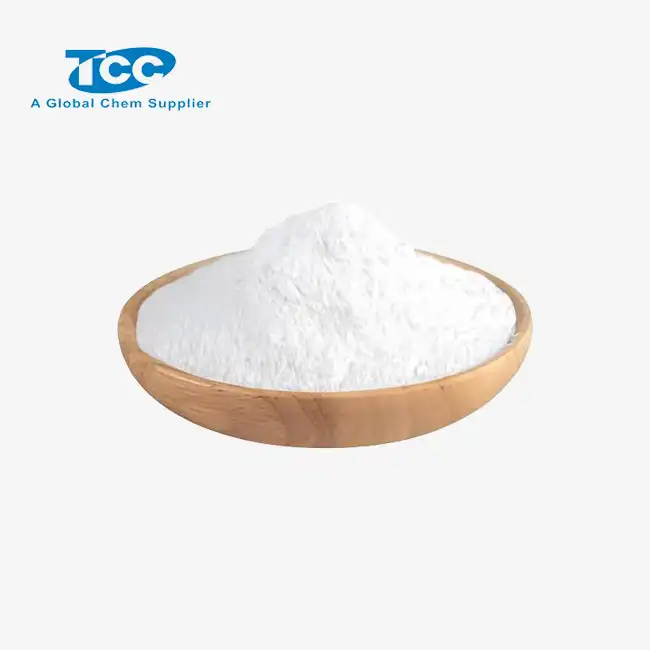
C5H6Cl2N2O2 is the molecular formula for the chemical. It shows how the molecule is structured. A dimethylated hydantoin ring is joined by two chlorine atoms to make a rigid molecule that breaks down slowly in water. Hypochlorous acid (HOCl), which is made when things break down, is the main disinfectant that stops biological processes from working and breaks down bacterial cell walls. Most of the time, the chlorine level is between 68% and 72%, which is a lot higher than many competing brands. People who buy it in bulk can use less of it and get more of it for less money.
This material is one of a kind because it only dissolves very little in water—about 0.2 grams per 100 grams at 25°C. This isn't a problem; it's a strength that lets you handle release. The chlorine levels stay the same because the thick powder breaks down slowly. So this is not the same as hypochlorite solutions, which quickly lose their chlorine. In cooling towers and recycle systems, where biofilm builds up more slowly, low-level cleaning that happens all the time works better than high-dose solutions that happen every once in a while.
Industrial Applications Across Sectors
Activities in the oilfield are a key area of use. Sulfate-reducing bacteria, hydrogen sulfide, and iron bacteria are some of the pollutants that can be found in water that is created from upstream mining. These impurities make aging happen faster and make injection wells less effective. This biocide works well in harsh oilfield conditions where other cleaners don't. It can be used in places with high temperatures and lots of salt. Keeping microbes from getting into water-based muds is also good for drilling fluid systems. In this way, the thickness doesn't change, and drilling works well.
The slow release rate of this drug keeps the water clean at aquaculture sites without hurting fish or shrimp. A common pathogen in shrimp farms is Vibrio bacteria. This bacterium dies when it is exposed to chlorine for a long time at a level that crabs can handle. When you add an oxidizer quickly, it can cause toxic shock. Being able to precisely dose stops this shock, which lowers the number of animals that die during disease outbreaks.
Legionnaires' disease is caused by bacteria called Legionella pneumophila. This bacterium is always a threat to cooling systems in workplaces and cities. When you clean a cooling tower, you need to use biocides that kill enough germs without hurting the metal surfaces or making the heat exchanger work less well. It doesn't change the pH much (5.5–6.5 in a 1% solution) and doesn't react with rust inhibitors, so it can be used for long-term tower cleaning programs.
Safety and Handling Protocols
The people in charge of buying things need to know how to store this biocide properly so that the quality of the product stays high. The main thing that speeds up decline is water. The powder shouldn't lose more than 1% of its weight when it dries, and less than 0.5% is even better. This will keep it from breaking down while it's being stored. The places where things are kept need to be dry, cool (below 30°C), and have good airflow. As well, things need to be closed tightly every time they are used.
Handling safety steps are in line with how oxidizers are usually used. People who work shifts should wear the right safety gear, such as rubber gloves, safety shields, and dust masks. It is important to keep the chemical free of oils, acids, and burning materials because it reacts strongly with reducing agents and organic materials. The way inorganic chlorinators work and the way spill reactions work are different. Sawdust and other materials that soak up water can start fires. Sodium thiosulfate should be used to clean up messes and make them safe for trash before they are thrown away according to local rules about poisonous trash.
A good source of Material Safety Data Sheets (MSDS) will have information on these steps as well as chemical information. They at Xi'an Taicheng Chem make sure that every package has all of the appropriate information in it. This helps them follow safety rules set by OSHA in the US and other places with similar rules. EHS managers, who are in charge of how chemicals are handled, have more faith in this because it is open.
Why Choose 1,3-Dichloro-5,5-dimethylhydantoin for Water Safety?
You should think about how well an industrial biocide kills certain organisms, how stable it is in work environments, how much it costs, and how it impacts the environment. Because it works so well in all of these areas, this 1,3-Dichloro-5,5-dimethylhydantoin powder directly leads to better processes and lower risk.
Superior Disinfection Efficacy
Comparative studies have shown that the rates at which pathogens are killed are very different. Escherichia coli and Staphylococcus aureus are often signs that water is dirty. At amounts as low as 5 ppm, the compound kills 99.9% of them in 30 minutes using normal test conditions. It can also kill bacteria, which is a strength. There is 2–3 ppm of chlorine left over in cooling systems for a long time, which kills blue-green algae (cyanobacteria) and green algae (Chlorella vulgaris) that grow there and make the water look bad.
A lot of disinfectants aren't very good at killing hepatitis viruses and other viruses that don't have envelopes. No matter what, the hypochlorous acid that is produced from the 1,3-Dichloro-5,5-dimethylhydantoin powder can still kill them. Because it works on a wide range of microbes, it means that fewer other biocides are needed. This simplifies treatment plans and lowers the overall cost of chemicals. Microbes are useful for treating a wide range of contaminants in water systems that are used for more than one thing. Engineers who work on water treatment like how flexible it is.
Advantages Over Alternative Sanitizers
Bleach made from sodium hypochlorite breaks down more quickly in warm places and less quickly in cooler ones. A 12% sodium hypochlorite solution might only be 10% or less after a few months. This makes it harder to find the right amount and could leave water systems unregulated. If you store it right, the solid form of 1,3-Dichloro-5,5-dimethylhydantoin powder works for years, so you never have to guess; the results are always the same.
TCCA has a lot of chlorine (90% usable), but it breaks down fast. This can cause chlorine spikes in some places, which can damage equipment or make the buffering systems in small systems work too well. This can't happen because the dimethyl chemical is slowly released. This makes automatic dosing equipment safer and lowers the chance of crashes caused by too much chlorine.
Hypochlorite of calcium makes alkaline byproducts that raise the pH and help scale build up in systems that use hard water. Since the 1,3-Dichloro-5,5-dimethylhydantoin powder doesn't leave behind any acids, it doesn't mess up pH control tools as much and doesn't need to be mixed with acid as often. Calcium carbonate scaling already makes it hard for heat to move around in cooling systems, so this trait is very helpful.
Environmental and Operational Benefits
The chlorine in this material breaks down into simple artificial chlorides and nitrogen compounds after it kills live things. It doesn't build up in the environment like other biocides or quaternary ammonium chemicals do. A lot of the time, chlorine can be taken out of wastewater from 1,3-Dichloro-5,5-dimethylhydantoin powder before it goes into the environment with sodium metabisulfite or sodium thiosulfate. This helps you follow the rules for garbage better.
People who are in charge of several treatment centers care about how simple it is to run each one. It's easier to take care of powder than liquid chlorine tanks or sodium hypochlorite bags because it is stable and easy to handle. The general cost of ownership is lower than the price per pound of chemical because there is less need for cold shipping, the storage area is smaller, and there is less chance of rusting in the storage area.
Procurement Considerations for B2B Buyers
Unit price is not the only thing that affects where to buy something. Procurement managers need to check how reliable the supplier is, how consistent the goods are, how much paperwork there is, and how well the supplier can help with technical problems. This will lower organizational risks and make sure that all laws are followed throughout the supply relationship.
Evaluating Manufacturers and Suppliers
Quality is different from one maker to the next because they use different pure raw materials and manufacturing limits. Reliable manufacturers go through several steps in the production process to get rid of toxins such as chloride salts and unreacted precursors that lower the amount of chlorine that is available. Each batch should have an analytical certificate that shows the important specs and the allowed testing methods that were used to find them. Some of these are iodometric titration to find out how much chlorine is available, gravimetric analysis to find out how much water is present, and sieve analysis to see how the particles are sized.
Xi'an Taicheng Chem works together with companies that are GMP-approved and have automatic process controls that make sure the quality of each batch of 1,3-Dichloro-5,5-dimethylhydantoin powder. Our ISO9000 certification shows that we have a well-organized way of checking the quality of our products, which includes checking both finished goods and raw materials. It is important to have these controls because even small deviations from the standards—moisture content above 1% or useful chlorine below 68%—can make disinfection less effective and cause goods to break down faster while they are being stored.
People are more likely to buy from suppliers who are honest about where their goods are made and how they check them. Plants that have licenses for worker safety and environmental permits show that they are committed to using responsible ways to make things. When looking at possible sellers, procurement teams should ask to see building licenses, audit reports from a third party, and references from well-known clients in the same industry.
Pricing Structures and Cost Optimization
Promises to volume have a big effect on unit prices. When you buy by the metric ton, you usually save 15–25% compared to when you buy in smaller amounts. People who want to buy in bulk have to think about how much room they need, how much cash they have, and how long the goods will last. If you store it right, the compound stays fixed for years, which means that larger purchases are cheap for places that have the right dry storage tools.
How much it costs to move things depends on where they come from, how they are shipped, and what part of the government they go through. As an oxidant (UN 3077, Class 9), the thing needs to be packed and labeled correctly before it can be sent in another country. Containerized ocean freight is the cheapest way to move items across the country, but it takes 4–6 weeks to get from Asian sources to U.S. ports. Air freight speeds up shipping but costs more, so it's only used when you need to replace quickly.
Compare the total landing cost of two items to get a good idea of how much they cost. This is the price plus any freight, taxes, or handling fees. Some sellers make up for their higher prices by sending the goods themselves or combining operations. Other sellers quote FOB terms, which mean that buyers need to arrange their own shipping. When it comes to transportation, Xi'an Taicheng Chem helps clients set prices that work with their project dates and budgets. They also offer flexible Incoterms to meet the needs of all of their clients.
Documentation and Regulatory Compliance
Many parts of a business benefit from having complete product paperwork. For example, the EHS department can check for safety, the quality control team can make sure the specs are correct, and the regulatory affairs staff can make sure everyone follows the rules. The GHS Safety Data Sheet (SDS), the Certificates of Analysis (COA) with test results unique to each batch, and the legal compliance statements for all the countries that matter are all important papers.
The Federal Insecticide, Fungicide, and Rodenticide Act (FIFRA) has rules that U.S. businesses need to know about when they can use biocide. Some sales of raw materials used in industry may not need to be registered with the EPA. However, many items used in water treatment do need to be registered. Suppliers should make it clear what stage of registration something is in and give help on how to meet legal standards for certain uses.
Some of the export papers that make it easier to get things through customs are packing lists, commercial invoices, bills of lading, and certificates of origin. When our export team puts together full packages of paperwork, it speeds up the process at the border and keeps production plans from getting thrown off. It's easier to do quality checks and answer questions about certain batches of documents when you keep electronic files.
Environmental and Regulatory Impact
Effective chemical care that also takes care of the earth and follows the rules is called "responsible care." People can make smart purchases that meet their practical, legal, and environmental needs when they know how industrial biocides affect the environment and how they are controlled. Adding 1,3-Dichloro-5,5-dimethylhydantoin powder to water treatment protocols supports these objectives.
Environmental Considerations
Disinfectants that are based on chlorine change when they are near water. Hypochlorous acid mixes with organic matter, ammonia, and other things to create chloramines. These are chlorine molecules that have been joined and are less effective at killing living things. With the help of light and bacteria, these chemicals break down even more, ending up as chloride ions, carbon dioxide, and nitrogen species. In food chains, chlorine leftovers don't build up like long-term organic toxins do.
Limits on how much extra chlorine can be released depend on where the water is going and what it is made of. In order to protect sea life, the U.S. EPA's National Pollutant Discharge Elimination System (NPDES) licenses generally allow only 0.011 to 0.019 mg/L of chlorine to stay in the water. To meet these guidelines, places that use 1,3-Dichloro-5,5-dimethylhydantoin powder to treat water must dechlorinate it before letting it go. Activated carbon filters or sodium bisulfite gets rid of any oxidants that are still present, which makes it possible for legal release.
Sustainable practices aren't just about end-of-life care. Chemicals are used less when dosing methods are optimized. This is good for the environment and saves money on materials. Tracking tools that change how much biocide is added based on real-time chlorine levels stop overtreatment and keep the cleaning going well. These tools, which are getting easier for medium-sized businesses to get, show how to use resources smartly.
Regulatory Frameworks in Key Markets
Laws in North America are made by different levels of government. Through the FIFRA licensing process, the EPA is in charge of antibacterial herbicides at the federal level. The government can make more rules. In California's Proposition 65, for instance, it talks about how people could be exposed to chemicals on the list. Permissible Exposure Limits (PELs) and risk communication rules tell people how to do their jobs. OSHA is in charge of making sure workplaces are safe.
REACH (Registration, Evaluation, Authorization, and Restriction of Chemicals) rules say that chemicals that are made or sold in any amount over one ton per year need to be listed with the European Union. The Biocidal Product Regulation (BPR) rules over antibiotic products. Before they can be accepted, they need to show that they work and are safe. People who sell goods in Europe need to learn how to use these models and fill out forms that help people further down the chain follow the rules.
Asian and Pacific markets are governed by different rules. In China, the Ministry of Ecology and Environment (MEE) is in charge of registering chemicals and giving out permits for their release into the environment. There are laws in Japan that make sure workers are safe around chemicals, and in Australia, there is a law called AICIS that controls the selling of industrial chemicals. If suppliers know about these different standards, they can help companies that buy things from other countries lower their legal risks.
Maximizing Water Safety Outcomes with 1,3-Dichloro-5,5-dimethylhydantoin
Through proper use, chemicals can be turned from chemical promises into real-world operations. To make sure the 1,3-Dichloro-5,5-dimethylhydantoin powder kills germs for a long time, keep the system's integrity, and keep costs low, make sure the dosing, tracking, and maintenance steps are followed properly.
Optimal Dosing and Storage Practices
The first amount is determined by the system's volume, the level of contamination, and the target waste. Shock treatments might need 5–10 ppm free chlorine in systems with a lot of dirt. It is possible to do this by putting 7–14 mg of the material per liter of water. This is 68% available chlorine. A residue of 1–3 ppm is normally left over after maintenance dosing. This is enough to stop germs from growing back without using too many chemicals.
In recycling systems, automatic erosion feeds make sure that the dose is the same for all systems. These machines put the 1,3-Dichloro-5,5-dimethylhydantoin powder into controlled-speed moving water. The chemical is slowly broken down to keep the goal residues. Tablet shapes aren't used as much in business settings, but they're good for smaller devices. It doesn't matter what kind of transport is used; regular testing against amounts of chlorine seen in the water guarantees accuracy.
One thing that determines how long something lasts is how it is stored. Caking and decay happen faster when the humidity is above 60%. Over time, this means there is less chlorine available. During wet times, buildings should keep the dehumidifiers running, and to keep an eye on things, moisture-indicating cards should be put in stores. Keep the original packaging closed until it is used. This is usually lined fiber drums or multi-wall paper bags with plastic covers. Any containers that are only partly closed should be resealed right away.
Monitoring and Adjustment Protocols
How well water cleans depends on what kind of water it is. The pH level changes the balance between hypochlorous acid and hypochlorite ions. Below pH 7.5, hypochlorous acid (which is stronger) takes over. Above pH 7.5, hypochlorite ions (which are weaker) take over. Systems that cool at pH 8.5 to 9.0 might need bigger residual aims to get the same amount of microbe reduction for scale control.
The oxidation processes that happen during organic loading use up chlorine, making it less useful for cleaning. To meet the need for chlorine, systems that deal with dirty water or organic matter need to add more of the 1,3-Dichloro-5,5-dimethylhydantoin powder. When you do regular tests, like using DPD colorimetric methods for free chlorine or online monitors for real-time tracking, you can see trends of use that let you make changes before the microbes come back.
Temperature changes both the longevity of chemicals and the speed at which bacteria grow. It takes less time for chlorine to break down when it's warmer, but it kills more live things. Fans that run at 90°F (32°C) may need chemicals added more often than fans that run at 70°F (21°C), but cleaning goes faster at the higher temperature. For these things to work together properly, you need to use your knowledge or, more and more, control systems that can figure out the best amount for each case.
Practical Success: Oilfield Water System Case Study
A Texas oil company in the middle of the process had issues with microbiologically influenced corrosion (MIC) in the system that dealt with produced water that would not go away. The sodium hypochlorite method wasn't very good because chlorine was lost quickly at 140°F, and it was tough to keep residues in place when hydrogen sulfide was present. There was more than 20 mils of rust per year in some important parts of the system. This made the system less stable.
For the change, the plant used 1,3-Dichloro-5,5-dimethylhydantoin powder and set up automatic erosion feeds in a number of injection spots. There were fewer than 10^6 CFU/mL of planktonic bacteria within 48 hours of the first 10 ppm shock treatment. This was too low to be detected. Maintenance amounts of 3–4 ppm kept things under control, and checking for stable bacteria once a week proved that the biofilm was gone.
A lot of work was done checking for rust. Over the course of six months, rust coupons cut the amount of mass loss by 75%, and measurements of the pit depths showed that the limited attack was over. The building thought that more durable pipes and machines would save more than $200,000 a year in costs. Findings like these showed that the material works well in tough conditions like oilfield work, where it's hot and dirty.
Conclusion
We need chemicals that work well, don't hurt bacteria, are useful, and are good for the environment in order to keep industrial water safe. This 1,3-Dichloro-5,5-dimethylhydantoin powder fills in important holes left by other cleaners because it stays steady and works on a lot of different surfaces. Because of how it works, it can be used in many places, from cooling towers in cities and fishing sites to systems that use created water from oil fields.
You need to be careful about the goods you buy, how you handle them, and how you dose them if you want for completion to work. It is safer and more effective to work with providers who offer consistent items, clear paperwork, and professional help. Businesses that want to stay ahead of the curve need to choose biocides that can do more than one thing. This is because rules are becoming stricter on saving the environment and keeping water clean.
FAQ
What storage conditions maintain product integrity?
It's important to keep the powder in dry, cool places that are less than 30°C (86°F) and have a relative humidity of less than 60%. The packages must not be able to be opened. When there is wetness, hydrolytic breakdown begins. This drops the chlorine that is available and leads to caking, which makes it harder to handle. Original packaging from sellers you can trust has layers that keep wetness out. If you open a bottle, you should close it back up right away and use it within six months. Liquid bleach breaks down in months, but this stuff will work for years if you store it right.
How does this compound compare to bleach in safety and efficacy?
Soda hypochlorite bleach breaks down quickly, especially in direct sunlight and hot weather, so you need to check the strength often. This solid 1,3-Dichloro-5,5-dimethylhydantoin powder stays strong even when it's kept. It also releases chlorine slowly into water, which stops concentration spikes that can damage equipment. Because there are no pressure tanks or harmful liquid spills, the solid form is safer to handle. Viruses and algae are more likely to be killed by small amounts that last a long time than most bacteria.
Can I obtain MSDS documentation before purchasing?
Sellers you can trust will give you Safety Data Sheets that meet GHS standards as part of the information you need before you buy. For safety checks, these papers list the different kinds of dangers, how to give first aid, how to deal safely, and what to do in an emergency. You should also be able to get Certificates of Analysis that show the test results for each batch if you ask for them. Possible clients can look through Xi'an Taicheng Chem's big technical sources. This helps them buy the right things and makes it easy for them to check for EHS issues before committing.
Partner with Xi'an Taicheng Chem for Your Water Treatment Needs
You can depend on Xi'an Taicheng Chem as your dependable 1,3-Dichloro-5,5-dimethylhydantoin powder manufacturer. They offer stable quality and are ISO9000 certified. They also have smart agreements with production sites that follow GMP guidelines. Our expert team tells you how to use our goods in certain situations, such as in oil fields, industrial cooling systems, and specific water treatment situations in the energy, environmental, and industry sectors. When you have all the information you need, like batch-specific COAs, regulatory compliance statements, and language MSDS, you can meet safety and quality assurance standards more quickly and easily. We can offer cheap prices because we work directly with companies, and our well-established transportation network ensures on-time delivery to businesses across North America and beyond. Talk to our team at sales@tcc-ofc.com about your specific needs, get full product information, and learn how our chemical solutions for cleaning water can make your processes safer and more effective.
References
1. White, G.C. (2010). Handbook of Chlorination and Alternative Disinfectants, 5th Edition. Hoboken: John Wiley & Sons.
2. Wojtowicz, J.A. (2001). Halogenated Hydantoins: Chemistry and Applications in Industrial Water Treatment. Journal of Industrial Microbiology & Biotechnology, 27(4), 241-248.
3. Dychdala, G.R. (2001). Chlorine and Chlorine Compounds. In S.S. Block (Ed.), Disinfection, Sterilization, and Preservation, 5th Edition. Philadelphia: Lippincott Williams & Wilkins.
4. American Water Works Association. (2017). AWWA Manual M20: Water Chlorination/Chloramination Practices and Principles, 3rd Edition. Denver: AWWA.
5. National Association of Corrosion Engineers. (2013). NACE International Publication 31214: Application of Biocides in Oil and Gas Production Systems. Houston: NACE International.
6. European Chemicals Agency. (2019). Biocidal Products Regulation: Assessment Report for Active Substance Dichlorodimethylhydantoin. Helsinki: ECHA.
Learn about our latest products and discounts through SMS or email