- English
- French
- German
- Portuguese
- Spanish
- Russian
- Japanese
- Korean
- Arabic
- Greek
- German
- Turkish
- Italian
- Danish
- Romanian
- Indonesian
- Czech
- Afrikaans
- Swedish
- Polish
- Basque
- Catalan
- Esperanto
- Hindi
- Lao
- Albanian
- Amharic
- Armenian
- Azerbaijani
- Belarusian
- Bengali
- Bosnian
- Bulgarian
- Cebuano
- Chichewa
- Corsican
- Croatian
- Dutch
- Estonian
- Filipino
- Finnish
- Frisian
- Galician
- Georgian
- Gujarati
- Haitian
- Hausa
- Hawaiian
- Hebrew
- Hmong
- Hungarian
- Icelandic
- Igbo
- Javanese
- Kannada
- Kazakh
- Khmer
- Kurdish
- Kyrgyz
- Latin
- Latvian
- Lithuanian
- Luxembou..
- Macedonian
- Malagasy
- Malay
- Malayalam
- Maltese
- Maori
- Marathi
- Mongolian
- Burmese
- Nepali
- Norwegian
- Pashto
- Persian
- Punjabi
- Serbian
- Sesotho
- Sinhala
- Slovak
- Slovenian
- Somali
- Samoan
- Scots Gaelic
- Shona
- Sindhi
- Sundanese
- Swahili
- Tajik
- Tamil
- Telugu
- Thai
- Ukrainian
- Urdu
- Uzbek
- Vietnamese
- Welsh
- Xhosa
- Yiddish
- Yoruba
- Zulu
Calcium Carbonate Powder for PVC Products: Key Advantages Explained
In recent years, calcium carbonate powder has emerged as the preferred mineral filler for PVC manufacture, solving important industry pain issues such as rising material costs, processing inefficiencies, and sustainability requirements. This white to light beige powder, with the chemical formula CaCO3, is a multifunctional addition that modifies PVC formulations by lowering the consumption of resin, increasing mechanical qualities and aesthetics of the product. For procurement experts looking for cost-effective solutions without sacrificing quality, knowing the technical subtleties of this mineral compound is key. At Xi’an TaiCheng Chem Co., Ltd, we have seen how the right choice of filler can have a direct influence on production throughput, product life and bottom-line profitability across a wide range of PVC applications – from rigid pipe systems to flexible building materials.
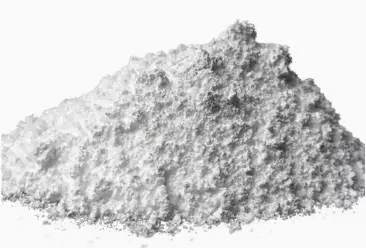
Understanding Calcium Carbonate Powder and Its Role in PVC Production
Understanding how this mineral filler fits inside the matrix of PVC is the basis of intelligent purchase. This carbonate molecule is not only an inert volume filler, but a performance modifier that modifies crystallisation patterns, thermal behaviour and dimensional stability during polymer processing.
Production Methods and Grade Differentiation
The product qualities are defined by two main ways of manufacture. Ground Calcium Carbonate (GCC) is produced by mechanically grinding limestone or marble. This results in uneven particle shapes, making it ideal for cost-sensitive applications. Precipitated Calcium Carbonate (PCC) is produced using a regulated chemical precipitation process, resulting in homogeneous particle geometries and better dispersion properties. Industrial-grade variations are usually more than 98.5% pure CaCO₃, meaning there is very little contamination to interfere with polymer cross-linking. This difference is very important because the form of the particles affects the way the filler interacts with the PVC chains during the extrusion or injection moulding cycles.
Particle Size Engineering and Performance Correlation
The median particle diameter (D50) is the key specification metric. Microfine grades from 1 to 10 microns are formulated to optimise the balance of reinforcement and processability. Ultra-fine PCC grades below 0.1 micron provide excellent impact strength for demanding structural applications. Our work with TaiCheng shows that a narrow particle size distribution (steep PSD curves) allows for greater filler loadings, frequently above 50 parts per hundred resin, without loss of melt flow properties. Processing irregularities and surface blemishes called “fish eyes” are caused by broader dispersion of the calendered films. The batches are checked for uniformity by laser diffraction analysis according to ISO 13320. Uniformity is an essential criterion for automated compounding lines in PVC at commercial scale.
Surface Modification Technologies
Hydrophilic surfaces of uncoated Calcium Carbonate powder mineral fillers are not compatible with hydrophobic PVC resins. A coating of stearic acid, sometimes referred to as “activation”, changes the surface chemistry by lowering the interfacial tension. This change reduces the oil absorption values from 35 g/100g to 15 g/100g, and the plasticiser need is decreased proportionally. The coating is used as a processing aid in high shear mixing by lowering the torque and energy consumption. We have ISO9000 certified quality procedures that confirm coating efficacy by measuring pH and contact angle, and ensure the hydrophobic barrier will work consistently across the temperature gradients seen in twin-screw extrusion.
Key Advantages of Using Calcium Carbonate Powder in PVC Manufacturing
This mineral filler solves many operational issues at once, resulting in synergies that justify its extensive use in the PVC supply chain.
Particle-polymer interactions in completed products provide technical benefits. Advantages come from validated field applications and laboratory investigations on hundreds of formulation adjustments.
Tensile modulus increases when the filler strengthens the polymer matrix's structure. Improved particle distribution reduces polymer chain mobility, deflecting heat by 8-12°C. This thermal modification raises pressure pipe system safe operating temperatures. Impact strength increases with loadings up to 30 phr because particles reduce fracture propagation. After optimum loading, stiffness improvements surpass toughness, requiring application-specific stress profile-guided formulation balancing.
Mineral nucleation causes cooling-induced PVC crystallisation. It reduces extrusion line or injection moulding cycle times by 15-20%. Window frames with precise tolerances benefit from fast crystallisation. Lower melt viscosity at similar processing temperatures reduces motor loads and screw element wear, increasing equipment life. The economic benefit is large in high-volume enterprises because three-shift production schedules compound slight throughput increases.
Strategic resin displacement: powder costs 20% of PVC resin, saving money immediately. The normal loading is 20-60 phr, depending on performance. A 40 phr formulation cuts raw material costs 18-22% without affecting regulatory compliance or end-use functionality. Fixed-price companies worry about petroleum-derived resin price volatility, but this cost structure stabilises procurement budgets.

Surface quality and aesthetics: Microfine particles cover minuscule surface defects, smoothing finishes with minimum post-processing. Due to its brightness, titanium dioxide, a more costly whitening chemical, is less required. Optically brightened UV-grade panelling and fencing withstand deterioration. By choosing particle size, matte to semi-gloss surfaces may fulfil architectural objectives without redesigning.
Environmental Responsibility: Mineral polymers lower carbon emissions. Moderately loaded chemicals reduce greenhouse gas emissions by 10-15% in life cycle studies. Industrial hygiene standards allow safe handling of non-toxic powder with LD50 values beyond 5000 mg/kg. REACH and RoHS formulations provide market access in countries with changing environmental restrictions. Corporate sustainability guarantees are increasingly sought by government and institutional buyers.
Pilot trials and production confirmation may assist procurement teams in evaluating these performance features' operational advantages. Filler parameters must meet PVC requirements.
Comparison of Calcium Carbonate Powder with Other Fillers in PVC
Alternative fillers present distinct trade-offs in cost, performance, and processing behavior. Informed selection requires understanding these comparative characteristics of Calcium Carbonate powder within the context of your product requirements and manufacturing capabilities.
Calcium Carbonate Versus Chalk and Limestone Powders
While chemically similar, industrial-grade fillers differ substantially in purity and particle engineering. Standard chalk powders often contain 2-5% silica impurities that accelerate equipment abrasion—a hidden cost manifesting as increased maintenance expenses and downtime. Limestone powders may include magnesium carbonate concentrations affecting thermal stability. Pharmaceutical or food-grade variants undergo additional purification but command premium pricing unjustified for structural PVC applications. The specification discipline at TaiCheng ensures our industrial grades deliver consistent purity exceeding 98.5% CaCO₃ with HCl-insoluble matter below 0.1%, meeting the stringent requirements of continuous compounding operations.
Functional Comparison with Specialty Fillers
Calcium phosphate and other specialty minerals offer specific benefits like flame retardancy but lack the cost-effectiveness for general-purpose PVC formulations. Baking soda (sodium bicarbonate) functions as a chemical blowing agent rather than a structural filler, serving entirely different formulation objectives. Talc provides superior stiffness but introduces processability challenges due to platy particle morphology. Kaolin clays improve electrical insulation properties at the expense of increased moisture sensitivity. The balanced property profile of calcium carbonate—combining adequate reinforcement, excellent processability, and economic viability—explains its dominance in volume PVC markets where cost-performance ratios determine competitive positioning.
Matching filler type to application requirements prevents over-specification that inflates costs without proportional performance gains. Our technical team assists in conducting comparative evaluations tailored to your specific PVC product line and quality standards.
Procurement Guide for B2B Clients: Buying Calcium Carbonate Powder for PVC Products
Reliability of delivery of correctly specified material is required via thorough assessment of a number of parameters. Choosing just on price or neglecting to validate the supplier’s technical capability might lead to production stoppages and quality escapes that much outweigh the earlier savings.
Critical Quality Metrics and Specification Verification
Request full certificates of analysis including particle size distribution by laser diffraction (ISO 13320), whiteness index (ISO 2470), moisture content (<0.2%) (ISO 787-2) and coating efficiency for the activated grades. pH levels in the range 9.0-10.0 suggest adequate alkalinity, not excessive reactivity. Oil absorption measurements (DOP technique according to the ASTM D281) allow forecasting the demand for plasticiser in flexible PVC formulations. Insist on lot tracking and batch retention practices that provide consistency throughout multi-year supply agreements. The TaiCheng testing labs are calibrated to national standards, enabling data integrity that can survive customer audits and third-party verification.
Supplier Capability Assessment
Besides product specifications, look for production certifications such as ISO 9001 quality management and ISO 14001 environmental systems. Compare production capacity to your volume needs, including surge capacity for seasonal variations in demand. Evaluate technical support infrastructure – the presence of application engineers that understand the specifics of PVC compounding differentiates strategic partners from transactional providers. Look at case studies of successful implementations in comparable applications. Our worldwide customer base throughout North America, the Middle East and South America displays a demonstrated ability to meet a variety of operating needs and regulatory settings.
Logistics and Supply Chain Considerations
Minimum Order Quantities (MOQ) are generally 20-25 metric tonnes for container shipments, which is a trade-off between freight economics and the expense of carrying inventory. Packaging may be in 25kg bags, or bulk bags (FIBCs) or bulk pneumatic vehicles depending on your handling infrastructure. Ocean freight has an average lead time of 4-6 weeks from order placed to arrival at port and requires cooperation with production planning systems. Customs paperwork must include harmonised tariff codes, safety data sheets (SDS) and certificates of origin. Experienced suppliers such as TaiCheng address these challenges by maintaining connections with established freight forwarders and being proactive in communicating vessel schedules and any possible delays. By setting safety stock to around 6-8 weeks of consumption, you have a buffer in the case of interruptions in the supply chain, but you are not tying up too much working capital in raw material stocks.
Having connections with technically competent suppliers that make the effort to understand your company needs provides competitive benefits that transactional relationships just cannot match.
Application-Specific Insights: Calcium Carbonate Powder in PVC Product Manufacturing
Different performance factors dictate filler selection and loading for PVC products. Recognising these details avoids specification incompatibilities that hinder product functionality and manufacturing.
15-25 phr hardens pressure water PVC pipe without affecting impact resistance. Nucleating minerals increase crystallinity and burst pressure. Since impact requirements are lower than pressurised applications, window and door profiles can bear 30-45 phr loadings. Cost reduction permits competitive construction prices and thermal insulation. In PVC wire insulation and garden hoses, micronised grades of 10-20 phr increase flexibility and tear resistance. Ultra-fine vinyl flooring has smooth embossed surfaces and thermal stability. For uniform cell structures in chemical foaming, PVC foam boards employ powder as filler and nucleator.
Filler characteristics interact with polymer rheology, processing conditions, and end-use performance parameters in each application sector, providing unique optimisation opportunities. Product specification is ideal with collaborative formulation development, pilot-scale trials, and performance testing.
Conclusion
The right mineral fillers, if used strategically in PVC formulations, give quantifiable benefits to operational, financial, and sustainability criteria. Technical characteristics of Calcium Carbonate powder, including particle size distribution, surface treatment and purity levels, have a direct impact on mechanical qualities, processing behaviour, and cost structures. Procurement choices based on a complete supplier assessment, therefore reducing the risks of global supply chains, are the basis for the evaluation of quality systems, technical support capabilities and logistical dependability. Application-specific optimisation by competent technical partners unlocks the full performance potential of these versatile additives. The changing PVC markets, driven by higher sustainability requirements and cost challenges, provide an opportunity to use sophisticated filler technologies as a competitive advantage differentiating industry leaders from commodity manufacturers.
FAQ
1. What particle size should I specify for rigid PVC pipe applications?
Median particle sizes (D50) between 3-7 microns provide the optimal balance for pressure piping systems. This range delivers adequate stiffness enhancement without compromising impact strength. Verify the D97 value remains below 20 microns to prevent surface defects and extruder screen blockage during continuous production.
2. How does coating treatment affect formulation adjustments?
Activated grades coated with stearic acid reduce plasticizer absorption by approximately 40% compared to untreated variants. This hydrophobic surface modification typically allows you to decrease plasticizer loadings by 2-3 phr while maintaining equivalent flexibility, directly reducing formulation costs.
3. Can this filler be used in food-contact PVC applications?
Industrial grades are appropriate for non-food-contact applications like construction materials and industrial components. Food-contact applications require pharmaceutical or food-grade variants meeting FDA 21 CFR 184.1409 specifications, which undergo additional purification steps and testing protocols.
4. What lead times should I expect for international orders?
Standard ocean freight from major Asian production hubs to U.S. ports averages 4-6 weeks port-to-port, plus inland transportation time. Air freight reduces transit to 5-7 days but increases per-ton costs substantially. Establishing safety stock covering 6-8 weeks of consumption provides buffer against shipping delays.
Partner with Taicheng for Premium Calcium Carbonate Powder Solutions
Taicheng stands ready to support your PVC manufacturing objectives with technically optimized mineral solutions backed by rigorous quality assurance and responsive customer service. Our ISO9000-certified production partnerships deliver consistent specifications that meet the demanding requirements of continuous compounding operations. Whether you're formulating rigid pressure piping, architectural profiles, or flexible specialty products, our technical team provides formulation guidance grounded in field-proven performance data. We understand the procurement challenges facing B2B clients—navigating international logistics, verifying supplier credentials, and ensuring uninterrupted supply to support production commitments. As a trusted calcium carbonate powder manufacturer and supplier, we've built long-term relationships across the oil and gas, construction, and specialty chemicals sectors by aligning our capabilities with your strategic objectives. Contact our team at sales@tcc-ofc.com to discuss your specific application requirements, request technical data sheets, or arrange sample evaluation. Experience the partnership difference that transforms mineral sourcing from a transactional necessity into a strategic competitive advantage.
References
1. Johnson, M.R., and Patterson, K.L. (2021). Mineral Fillers in Thermoplastic Compounds: Technical Performance and Economic Optimization. Industrial Polymers Press.
2. Chen, W., Liu, S., and Rodriguez, A. (2020). "Particle Size Effects on Mechanical Properties of Calcium Carbonate Filled PVC Composites." Journal of Applied Polymer Science, 137(42), 49215-49228.
3. European Calcium Carbonate Association (2022). Quality Standards and Testing Protocols for Industrial Mineral Fillers. Technical Bulletin ECCa-2022-04.
4. Singh, R.P., and Mahmoud, H. (2019). "Surface Modification of Mineral Fillers: Impact on Polymer Processing and Product Performance." Polymer Engineering & Science, 59(8), 1653-1667.
5. Thompson, D.G. (2023). Sustainable PVC Formulation Strategies: Reducing Carbon Footprint Through Intelligent Filler Selection. Green Chemistry Publications.
6. Wu, X., Anderson, B., and Kowalski, P. (2021). "Cost-Performance Analysis of Mineral Fillers in Rigid PVC Applications." Plastics Additives & Compounding, 23(3), 22-29.
_1745407713975.webp)
Learn about our latest products and discounts through SMS or email