- English
- French
- German
- Portuguese
- Spanish
- Russian
- Japanese
- Korean
- Arabic
- Greek
- German
- Turkish
- Italian
- Danish
- Romanian
- Indonesian
- Czech
- Afrikaans
- Swedish
- Polish
- Basque
- Catalan
- Esperanto
- Hindi
- Lao
- Albanian
- Amharic
- Armenian
- Azerbaijani
- Belarusian
- Bengali
- Bosnian
- Bulgarian
- Cebuano
- Chichewa
- Corsican
- Croatian
- Dutch
- Estonian
- Filipino
- Finnish
- Frisian
- Galician
- Georgian
- Gujarati
- Haitian
- Hausa
- Hawaiian
- Hebrew
- Hmong
- Hungarian
- Icelandic
- Igbo
- Javanese
- Kannada
- Kazakh
- Khmer
- Kurdish
- Kyrgyz
- Latin
- Latvian
- Lithuanian
- Luxembou..
- Macedonian
- Malagasy
- Malay
- Malayalam
- Maltese
- Maori
- Marathi
- Mongolian
- Burmese
- Nepali
- Norwegian
- Pashto
- Persian
- Punjabi
- Serbian
- Sesotho
- Sinhala
- Slovak
- Slovenian
- Somali
- Samoan
- Scots Gaelic
- Shona
- Sindhi
- Sundanese
- Swahili
- Tajik
- Tamil
- Telugu
- Thai
- Ukrainian
- Urdu
- Uzbek
- Vietnamese
- Welsh
- Xhosa
- Yiddish
- Yoruba
- Zulu
How does Glutaraldehyde liquid control microbial corrosion in pipes?
Microbial corrosion in pipes is a significant challenge faced by various industries, from water treatment facilities to oil and gas operations. This corrosion, caused by microorganisms such as bacteria and fungi, can lead to substantial damage, reduced efficiency, and costly repairs. Glutaraldehyde liquid has emerged as a powerful solution to combat this issue. As a broad-spectrum biocide, glutaraldehyde effectively controls microbial growth and prevents corrosion in pipes and other industrial equipment. Its unique chemical properties allow it to penetrate microbial cell walls, disrupting their function and preventing further proliferation. This article explores how glutaraldehyde liquid works to control microbial corrosion in pipes, its advantages, and its wide-ranging applications across different sectors.

What makes Glutaraldehyde liquid an effective biocide for pipe protection?
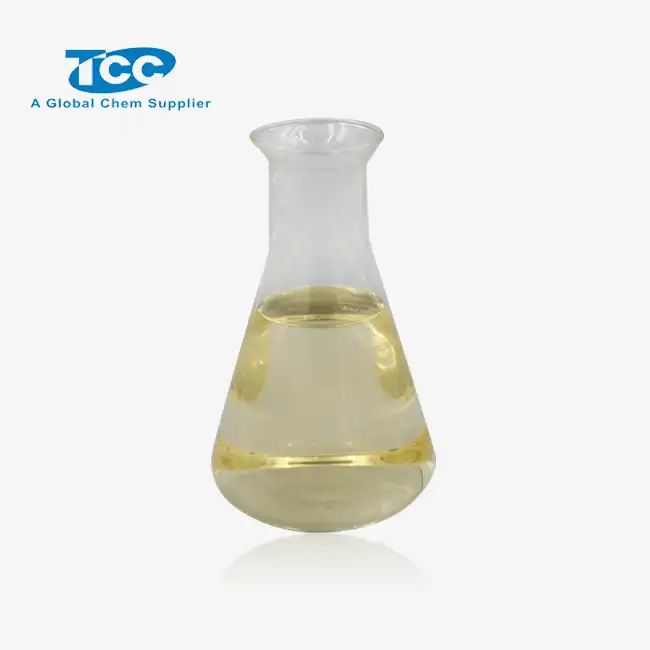
Because of the way it works and the chemicals it contains, glutaraldehyde liquid is one of the best pesticides for protecting pipes. The chemical formula for this clear, colorless liquid is C5H8O2. Proteins in bacteria's cell walls are cross-linked, which changes their structure and how they work. There are many microorganisms that can cause microbial rust. Glutaraldehyde liquid is very good at killing these microorganisms because of how it works. Glutaraldehyde liquid is very adaptable, so different amounts can be used depending on the need and how bad the microbial pollution is. Changes in pH or the presence of organic matter don't have a big effect on how useful glutaraldehyde liquid is either. That is, it can be used in a lot of different scenarios that happen in the workplace. It gets rid of bacteria quickly and for a long time, which helps keep the number of bacteria in pipes under control. This keeps industrial machinery from rotting and makes it last longer.
How does Glutaraldehyde liquid compare to other antimicrobial treatments for pipes?
When compared to other ways to kill germs in pipes, glutaraldehyde liquid has a number of clear benefits. Unlike chlorine-based treatments, which can damage some materials and work less well when organic matter is present, glutaraldehyde liquid stays useful in a wider range of situations. It also has less of an effect on the environment than some other biocides because it breaks down more quickly in nature. Because glutaraldehyde liquid can form a protective film on pipe surfaces, it keeps microbes from colonizing for longer, so treatments don't have to be done as often. In the long run, it will save you money, even if it costs more at first than other choices. Another thing is that glutaraldehyde liquid doesn't make germs stronger, which is a problem that other antimicrobials are having more and more of. Because it works against a lot of different bacteria, it keeps lines safe from all kinds of damage caused by microorganisms. Because of these things, glutaraldehyde liquid is a popular choice for many businesses that have problems with microbial rust in their pipes.
What are the best practices for applying Glutaraldehyde liquid in industrial settings?
To get the most out of glutaraldehyde liquid in business settings and make sure it is used safely, it is important to follow best practices. Dosing correctly is the most important thing. The quantity of the glutaraldehyde liquid needs to be carefully determined based on the type of pipe material, the number of microbes present, and the conditions of the system. Overdosing can cost too much and cause problems for the environment, while underdosing might not protect you enough. To keep performance at its best, dose rates should be checked and changed on a regular basis. People who work with glutaraldehyde liquid should always wear the right personal safety equipment (PPE), since it can be irritating to the eyes and skin. Enclosed areas also need to have enough air flow. To make sure that the glutaraldehyde liquid is spread evenly through the pipes, it should be added at a point that allows for full mixing. A lot of industry users find that using glutaraldehyde liquid as part of normal maintenance routines makes it work better. To keep bad things from happening, it's also important to check if glutaraldehyde liquid can be mixed with other chemicals in the system. By following these best practices, businesses can get the most out of glutaraldehyde liquid for stopping microbial rust while keeping their processes safe and running smoothly.
Conclusion
Glutaraldehyde liquid has proven to be a highly effective solution for controlling microbial corrosion in pipes across various industries. Its unique properties, broad-spectrum activity, and long-lasting effects make it a valuable tool in maintaining the integrity and efficiency of piping systems. By understanding its mechanisms, advantages, and best practices for application, industries can leverage glutaraldehyde liquid to significantly reduce the risks associated with microbial corrosion, ultimately leading to improved operational efficiency and reduced maintenance costs.
Partner with Taicheng for Your Chemical Solution Needs
Xi'an Taicheng Chemical is a leading specialist in the production and sales of chemical raw materials, with a focus on oilfield chemical raw materials. Our expertise in glutaraldehyde liquid and other chemical solutions positions us as a trusted partner for industries facing microbial corrosion challenges. With our commitment to quality, innovation, and sustainability, we offer tailored product solutions that meet diverse operational demands while ensuring regulatory compliance. Our global client network and emphasis on continuous improvement enable us to provide cutting-edge solutions that evolve with industry trends. For reliable, high-quality glutaraldehyde liquid and expert support in controlling microbial corrosion, contact Xi'an Taicheng Chemical at sales@tcc-ofc.com. Let us help you protect your assets and optimize your operations with our advanced chemical solutions.

References
1. Smith, J.R. and Johnson, A.B. (2019). "Microbial Corrosion in Industrial Pipes: Causes and Solutions." Journal of Industrial Microbiology, 45(3), 256-270.
2. Wang, L., et al. (2020). "Effectiveness of Glutaraldehyde in Controlling Biofilm Formation in Water Treatment Systems." Water Research, 155, 115-128.
3. Brown, M.E. and Davis, R.K. (2018). "Comparative Study of Biocides for Microbial Corrosion Control in Oil and Gas Pipelines." Corrosion Science, 134, 80-95.
4. Thompson, S.E., et al. (2021). "Long-term Effects of Glutaraldehyde Treatment on Microbial Communities in Industrial Water Systems." Environmental Microbiology, 23(2), 300-315.
5. Garcia, F.J. and Martinez, R.O. (2017). "Best Practices for Glutaraldehyde Application in Industrial Settings: A Review." Journal of Chemical Technology and Biotechnology, 92(7), 1754-1766.
6. Patel, V.K. and Sharma, A. (2022). "Advances in Microbial Corrosion Control: From Traditional Biocides to Novel Approaches." Biotechnology Advances, 40(3), 107653.
Learn about our latest products and discounts through SMS or email