- English
- French
- German
- Portuguese
- Spanish
- Russian
- Japanese
- Korean
- Arabic
- Greek
- German
- Turkish
- Italian
- Danish
- Romanian
- Indonesian
- Czech
- Afrikaans
- Swedish
- Polish
- Basque
- Catalan
- Esperanto
- Hindi
- Lao
- Albanian
- Amharic
- Armenian
- Azerbaijani
- Belarusian
- Bengali
- Bosnian
- Bulgarian
- Cebuano
- Chichewa
- Corsican
- Croatian
- Dutch
- Estonian
- Filipino
- Finnish
- Frisian
- Galician
- Georgian
- Gujarati
- Haitian
- Hausa
- Hawaiian
- Hebrew
- Hmong
- Hungarian
- Icelandic
- Igbo
- Javanese
- Kannada
- Kazakh
- Khmer
- Kurdish
- Kyrgyz
- Latin
- Latvian
- Lithuanian
- Luxembou..
- Macedonian
- Malagasy
- Malay
- Malayalam
- Maltese
- Maori
- Marathi
- Mongolian
- Burmese
- Nepali
- Norwegian
- Pashto
- Persian
- Punjabi
- Serbian
- Sesotho
- Sinhala
- Slovak
- Slovenian
- Somali
- Samoan
- Scots Gaelic
- Shona
- Sindhi
- Sundanese
- Swahili
- Tajik
- Tamil
- Telugu
- Thai
- Ukrainian
- Urdu
- Uzbek
- Vietnamese
- Welsh
- Xhosa
- Yiddish
- Yoruba
- Zulu
What is the influence of sodium ligninsulfonate powder on mud cake permeability?
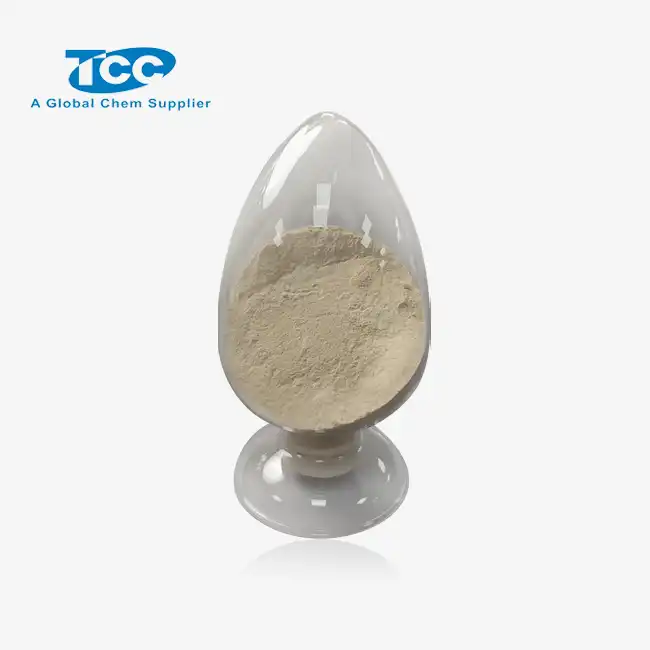
Sodium ligninsulfonate powder plays a crucial role in drilling operations, particularly in its influence on mud cake permeability. This brown, water-soluble powder, with the molecular formula C20H24Na2O10S2, is widely used as a concrete water reducer, petroleum drilling mud dispersant, and printing and dyeing diffusion agent. In the context of drilling fluids, sodium ligninsulfonate powder significantly impacts the formation and properties of the mud cake, which is essential for maintaining wellbore stability and controlling fluid loss. By altering the mud cake's permeability, this additive helps optimize drilling performance, reduce formation damage, and improve overall operational efficiency. Understanding the influence of sodium ligninsulfonate powder on mud cake permeability is vital for engineers and operators in the oil and gas industry, as it directly affects the success and cost-effectiveness of drilling projects.

How does sodium ligninsulfonate powder affect mud cake thickness?
One important thing to know about digging is that sodium ligninsulfonate powder has a big effect on the width of the mud cake. When you mix sodium ligninsulfonate powder with drilling fluids, it really breaks down and thins out the fluids. When you dig, mud builds up on the wall of the wellbore. This helps move the mud around. The clay bits in the drilling fluid don't stick together because the powder can separate them. This packs the mud cake down and makes it smaller. That smaller mud cake helps because it lowers the chance of difference sticking, speeds up the entry rate, and all around makes the drilling process better. The sodium ligninsulfonate powder also changes how thick the mud cake is. This makes it easier to control the filter and keeps the formation from losing too much fluid. To keep the wellbore steady and protect the rock from damage, sodium ligninsulfonate powder makes the mud cake better in ways like thickness. This is necessary for digging to go well and for output to follow.
What role does sodium ligninsulfonate powder play in fluid loss control?
Sodium ligninsulfonate powder is a key part of keeping water from escaping while you dig. Because it dissolves in water, it makes the drilling fluid much better at stopping the fluid from seeping into the rock. When sodium ligninsulfonate powder is mixed with other parts of the drilling mud, it forms a cake on the wall of the wellbore that doesn't let much fluid pass through it. That's because the filter cake stops some of the fluid from getting into the rocks around it. Because the powder can spread out, it helps keep the suspension system of the drilling fluid stable. So, the particles don't stick together, which could lead to more fluid loss. It is also possible to stop fluid loss with sodium ligninsulfonate powder, which helps keep the right hydraulic pressure in the well cavity. To keep the wellbore steady and stop formation fluid from getting in, this is important. It cuts running costs, keeps rock damage to a minimum, and helps keep drilling fluid by controlling fluid loss well. These are all important for drilling projects to go well.
How does sodium ligninsulfonate powder influence mud cake removal efficiency?
Sodium ligninsulfonate powder has a big effect on how well mud cakes are removed, which is an important part of finishing a well and making oil. The powder's spreading abilities not only help make a thin, impermeable mud cake, but they also change how easy it is to get rid of the cake when it's time. Sodium ligninsulfonate powder helps make a mud cake that sticks to the wellbore wall less strongly during the drilling process than cakes made without this addition. This trait is especially helpful during activities to clean up and finish a well. Because the mud cake doesn't stick as well, it's easier to get rid of using different methods, like chemical treatments or mechanical methods. The sodium ligninsulfonate powder can also keep the mud cake flexible and stop it from getting too hard over time, which makes it easier to remove. This better cleanup efficiency is important for getting the most out of production rates because leftover mud cake can make the formation less permeable and slow down flow. Sodium ligninsulfonate powder improves the efficiency of removing mud cakes, which leads to better well performance and less time and money spent on well cleanup.

Conclusion
In conclusion, sodium ligninsulfonate powder significantly influences mud cake permeability in drilling operations. Its ability to reduce mud cake thickness, control fluid loss, and improve removal efficiency makes it an invaluable additive in the oil and gas industry. By optimizing these critical aspects of mud cake properties, sodium ligninsulfonate powder contributes to enhanced drilling performance, reduced formation damage, and improved overall operational efficiency. As the industry continues to face challenging drilling environments, the role of this versatile additive in maintaining wellbore stability and ensuring successful drilling projects remains crucial.
Partner with Taicheng for Premium Sodium Ligninsulfonate Solutions
Xi'an Taicheng Chemical is a leading specialist in the production and sales of chemical raw materials, with a focus on oilfield chemical raw materials. Our sodium ligninsulfonate powder is engineered to meet the demanding requirements of drilling operations, offering superior performance in mud cake permeability control. With our emphasis on quality, innovation, and sustainability, we provide tailored product solutions that balance cost-efficiency, operational reliability, and environmental compliance. Our global client network spans Europe, South America, Africa, and beyond, supported by robust logistics and technical support frameworks. As a trusted partner in the oilfield sector, we are committed to redefining excellence in chemical solutions for the energy industry. For premium-grade sodium ligninsulfonate powder and expert support, contact us at sales@tcc-ofc.com. Choose Taicheng for your drilling fluid additives and experience the difference in quality and performance.
References
1. Zhang, L., et al. (2020). "Influence of sodium ligninsulfonate on mud cake properties in high-temperature drilling operations." Journal of Petroleum Science and Engineering, 185, 106633.
2. Wang, Y., et al. (2018). "Effects of sodium ligninsulfonate on the rheological and filtration properties of water-based drilling fluids." Applied Clay Science, 161, 427-435.
3. Li, M., et al. (2019). "Experimental study on the influence of sodium ligninsulfonate on mud cake microstructure." Colloids and Surfaces A: Physicochemical and Engineering Aspects, 577, 245-251.
4. Huang, W., et al. (2021). "Synergistic effect of sodium ligninsulfonate and polyanionic cellulose on mud cake properties and wellbore stability." Journal of Natural Gas Science and Engineering, 88, 103823.
5. Shen, X., et al. (2017). "Investigation of the effect of sodium ligninsulfonate on the filtration properties of water-based drilling fluids." Petroleum, 3(2), 175-181.
6. Chen, G., et al. (2022). "Influence of sodium ligninsulfonate on the permeability and microstructure of filter cakes in oil-based drilling fluids." Energy & Fuels, 36(3), 1523-1531.
_1741765404878.webp)
Learn about our latest products and discounts through SMS or email