- English
- French
- German
- Portuguese
- Spanish
- Russian
- Japanese
- Korean
- Arabic
- Greek
- German
- Turkish
- Italian
- Danish
- Romanian
- Indonesian
- Czech
- Afrikaans
- Swedish
- Polish
- Basque
- Catalan
- Esperanto
- Hindi
- Lao
- Albanian
- Amharic
- Armenian
- Azerbaijani
- Belarusian
- Bengali
- Bosnian
- Bulgarian
- Cebuano
- Chichewa
- Corsican
- Croatian
- Dutch
- Estonian
- Filipino
- Finnish
- Frisian
- Galician
- Georgian
- Gujarati
- Haitian
- Hausa
- Hawaiian
- Hebrew
- Hmong
- Hungarian
- Icelandic
- Igbo
- Javanese
- Kannada
- Kazakh
- Khmer
- Kurdish
- Kyrgyz
- Latin
- Latvian
- Lithuanian
- Luxembou..
- Macedonian
- Malagasy
- Malay
- Malayalam
- Maltese
- Maori
- Marathi
- Mongolian
- Burmese
- Nepali
- Norwegian
- Pashto
- Persian
- Punjabi
- Serbian
- Sesotho
- Sinhala
- Slovak
- Slovenian
- Somali
- Samoan
- Scots Gaelic
- Shona
- Sindhi
- Sundanese
- Swahili
- Tajik
- Tamil
- Telugu
- Thai
- Ukrainian
- Urdu
- Uzbek
- Vietnamese
- Welsh
- Xhosa
- Yiddish
- Yoruba
- Zulu
1,3-Dichloro-5,5-dimethylhydantoin Powder vs Other Chlorine Sources: Which Wins?
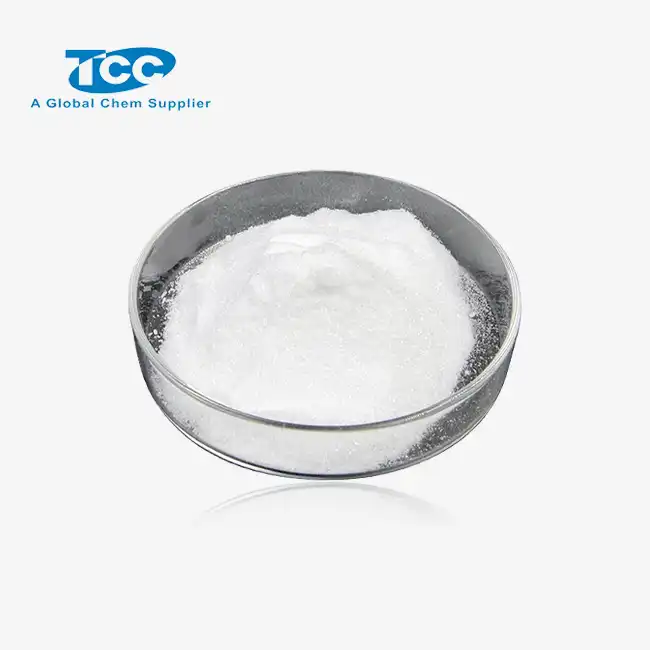
When comparing industrial disinfectants, DCDMH 1,3-Dichloro-5,5-dimethylhydantoin powder emerges as a practical winner for most B2B applications. This white to off-white crystalline compound (CAS No. 118-52-5) delivers 68-72% available chlorine through a controlled-release mechanism, eliminating bacteria, fungi, viruses, and algae while maintaining operational stability. Unlike liquid bleach that degrades during transport or calcium hypochlorite, prone to moisture sensitivity, DCDMH combines shelf stability with sustained antimicrobial action—a critical advantage for oilfield water treatment, aquaculture, and industrial cooling systems where consistent disinfection levels prevent costly microbial buildup and equipment failure.
Understanding the Chemistry Behind 1,3-Dichloro-5,5-Dimethylhydantoin Powder
The main difference between chlorine sources is how they kill living things. Over the years that Xi'an Taicheng Chem has been selling chemicals for water treatment, we've seen that the molecular structure of 1,3-Dichloro-5,5-dimethylhydantoin powder (molecular formula C5H6Cl2N2O2, molecular weight 197.02 g/mol) makes it work in a certain way. This solid powder slowly releases hypochlorous acid when it mixes with water. This is the same active sanitizer that is found in other chlorine sources. Its low water solubility (about 0.2g/100g at 25°C) gives it a slow-release feature. This creates a self-regulating system that keeps chlorine levels steady without the concentration spikes that happen with alternatives that dissolve quickly.
Physical Properties That Matter for Industrial Use
A freezing point between 130°C and 134°C means the product is very pure, and standard requirements say that the loss on drying must be less than 1.0%. This low moisture level stops the powder from breaking down and clumping up too quickly, so it can be used with automatic dosing equipment. When businesses buy from certified sources like us, the goods are ≥98.0% pure and have an available chlorine level that always tests between 68 and 72%, as shown by iodometric titration following HG/T standards. These factors have a direct effect on the accuracy of the dose and the cost of storage, which are important factors that procurement managers look at closely when deciding whether to work with a seller for a long time.
How DCDMH Delivers Antimicrobial Efficacy
Controlled release of hypochlorous acid breaks down the cell walls of microbes, stopping metabolic processes and killing pathogens like hepatitis viruses and resistant algae strains. The organic N-halamine structure of 1,3-Dichloro-5,5-dimethylhydantoin powder keeps working at pH levels where other oxidizers lose their usefulness. This is different from chlorine gas, which disappears quickly, or sodium hypochlorite, which breaks down easily when heated. This is especially helpful in alkaline cooling water systems like those used in the oil industry, where pH levels often go above 8.5, and regular chlorination doesn't keep sanitation levels high enough.
Head-to-Head Comparison: DCDMH Against Common Chlorine Alternatives
To choose the right pesticide, you need to know how performance trade-offs work in different working settings. Our technical team at Taicheng gets calls all the time from oilfield service companies and water treatment providers who want to compare different disinfectant choices. The evaluation needs to look at more than just the rate at which microbes are killed. It also needs to look at handling safety, legal compliance, and the total cost of ownership, which includes the costs of transportation, storage, and work.
DCDMH vs Sodium Dichloroisocyanurate (SDIC)
Both chemicals are in the same family as organic chlorine, but there are important differences that affect which ones can be used for what. Sodium Dichloroisocyanurate pills break down faster than 1,3-Dichloro-5,5-dimethylhydantoin powder, creating a quick chlorine burst that works well for shock treatments but not so well for keeping residue levels steady. Because SDIC dissolves more easily (about 25g/L), concentration spikes can happen that speed up corrosion in metal heat exchanges and pipe systems. 1,3-Dichloro-5,5-dimethylhydantoin powder dissolves more slowly, so it spreads out more evenly in large amounts of water. This lowers the chance of over-chlorination in one area, which can damage equipment or make trihalomethane by-products. Safety data sheets show that 1,3-dichloro-5,5-dimethylhydantoin powder makes less unpleasant fumes when it is handled, which is useful for protecting workers in drilling sites that are closed off.
DCDMH vs Calcium Hypochlorite
Calcium hypochlorite has more chlorine available (65–70%), but it is sensitive to wetness, which means it doesn't last as long once the packages are opened. This hygroscopic property makes it slowly lose its effectiveness and raises the risk of fire when kept near organic materials. In hot places where drilling operations usually happen in the summer, calcium hypochlorite can break down on its own, which can pose safety risks and waste inventory. The crystal structure of 1,3-Dichloro-5,5-dimethylhydantoin powder stays steady for many years if it is kept in a dry, covered container. This means that it doesn't need to be bought as often and costs less to store. These problems can be avoided if suppliers provide GMP-certified 1,3-Dichloro-5,5-dimethylhydantoin powder with the right packing paperwork. This also makes sure that the quality of all shipments is the same.
DCDMH vs Liquid Bleach (Sodium Hypochlorite)
Liquid bleach is the most common way for cities to clean water because it is easy to use, but it can be hard for corporate B2B buyers to get it. The cost of transporting large amounts of liquid hypochlorite goes up because they need special pump trucks and holding tanks that don't rust. After being made, the solution keeps breaking down, losing about 10–15 percent of its effectiveness each year, even in the best keeping conditions. In remote oilfields, there isn't always the right infrastructure for handling chemicals safely in liquid form. This makes solid oxidizers like 1,3-Dichloro-5,5-dimethylhydantoin powder more useful. One 25 kg drum of 1,3-Dichloro-5,5-dimethylhydantoin powder can disinfect as well as hundreds of liters of bleach. This means that much less freight is needed and much less warehouse space is needed. These two factors directly improve the buying economics for companies that manage activities spread out across multiple well sites.
Critical Selection Factors for B2B Procurement Professionals
When picking a chlorinating agent, the decision-making process includes more than just technical details. It also includes meeting regulatory requirements, making sure the supply chain is reliable, and making sure the agent fits with operating safety procedures. In the oil and gas industry, purchasing managers really like sellers who understand how these factors are related and provide a lot of information to back up their buying reasons.
Performance Under Variable Conditions
Different uses of water have very different chemical makeups. For example, produced water from oil wells has hydrocarbons and dissolved solids in it, water in cooling towers builds up mineral scale and biofilms, and water in aquaculture systems stays neutral pH with a lot of organic matter in it. 1,3-Dichloro-5,5-dimethylhydantoin powder is useful across this range because it produces hypochlorous acid in a stable way, whether it is used on acidic formation water or alkaline process streams. Temperature resistance is also important. The compound keeps killing living things from almost freezing temperatures to high temperatures above 40°C, which is different from bromine compounds that quickly evaporate in hot systems. This stability in performance means that formulas don't have to be changed as often or as many chemicals have to be kept on hand.
Safety Protocols and Worker Protection
Material Safety Data Sheets list 1,3-Dichloro-5,5-dimethylhydantoin powder as an oxidizer that needs normal safety gear to handle. However, it is not as dangerous when it comes to acute poisoning as compressed chlorine gas or concentrated hypochlorite solutions. With solid formulations, the chance of catastrophic leaks that require emergency action plans goes down a lot. Oilfield service companies that have to follow strict HSE (Health, Safety, Environment) rules like it when 1,3-Dichloro-5,5-dimethylhydantoin powder spills can be cleaned up without having to call in hazmat teams. This lowers their risk of being sued. Proper training stresses staying away from reducing agents and biological materials, but since elemental chlorine doesn't produce flammable chlorine gas, there are no breathing problems that come up when using it.
Supply Chain Reliability and Certification
A biocide can become economically useful or stay a rare substitute depending on how often it is available. At Xi'an Taicheng Chem, we have smart relationships with GMP-certified factories that make sure we have a steady supply even when demand is high. Our ISO9000 certification and A-level taxpayer standing show that we are an honest business, which is something that buyers are looking for more and more when they are choosing providers. We offer a set of documents that makes it easier for EPC companies handling multinational projects to get approvals. These include Certificates of Analysis, MSDS in multiple languages, and letters of regulatory compliance. Different operational scales can be accommodated by packaging choices ranging from 25 kg fiber drums to 1000 kg bulk bags. Global logistics skills allow delivery to remote sites across countries.
Real-World Applications Proving DCDMH Effectiveness
Theoretical benefits are not as important as success in the real world. The cases below show how 1,3-Dichloro-5,5-dimethylhydantoin powder helps our industrial users in a variety of fields solve real-world problems.
Oilfield Cooling Water Systems
A Texas downstream pipeline company used to use liquid sodium hypochlorite to keep microbes out of the cooling towers at compressor stations. The heat of summer sped up the bleach's breakdown, so it had to be delivered twice a week, and the chlorine level had to be checked all the time. After moving to 1,3-Dichloro-5,5-dimethylhydantoin powder from Taicheng, maintenance doses were increased to every two weeks while biofilm control stayed at a high level. The slow-release system kept the residual chlorine level in the ideal range of 1-3 ppm without any changes being made by hand. This cut chemical costs by about 30% and got rid of corrosion problems in the storage tanks. The engineering firm in charge of the shift liked our expert help in figuring out dosage rates based on the chemistry of the water and the amount of heat in the area.

Aquaculture Disinfection Protocols
Vibrio bacteria attacks that ruin crops are fought by shrimp farms, but harsh chlorination stresses aquatic life. Based on our application advice, a big aquaculture producer in Southeast Asia put 1,3-Dichloro-5,5-dimethylhydantoin powder treatment procedures into place. This got rid of pathogens and kept water quality levels in the right ranges for young shrimp. The controlled release of chlorine stopped the harmful shock that comes with fast-dissolving cleaners, which increased the number of organisms that survived during critical growth stages. This example shows that 1,3-dichloro-5,5-dimethylhydantoin powder can be used in situations where biological sensitivity needs exact oxidizer management, which is something that liquid chemicals have a hard time doing reliably.
Industrial Water Treatment Plants
More and more people are pushing municipal and corporate water companies to cut down on disinfection by-products (DBPs), like trihalomethanes, which are made when free chlorine reacts with organic matter. A factory that treats used process water changed the calcium hypochlorite to 1,3-Dichloro-5,5-dimethylhydantoin powder to lower the amount of DBP that formed. This is because the steady release of chlorine lowers the high concentrations that are caused by by-product chemistry. Environmental officials and sustainability officers are becoming more aware of controlled-release oxidizers as a way to balance microbial safety with environmental responsibility. This creates a market need that forward-thinking providers meet by coming up with new technologies and applying their knowledge in new ways.
Practical Procurement Guide for Sourcing DCDMH Powder
Finding the lowest price per kilogram is not the only way to make sure you have a steady supply of high-quality sanitizer. B2B buyers should look at all of a supplier's services, like quality assurance systems, customization options, and help after the sale. These are the things that decide the long-term value of a partnership with a 1,3-Dichloro-5,5-dimethylhydantoin powder manufacturer.
Evaluating Supplier Credentials
Verified licenses show that the company knows how to make things and follows the rules. ISO9000 approval makes sure that quality management systems keep track of how consistently production is done, and GMP alignment makes sure that methods used in pharmaceuticals keep contamination risks to a minimum. Buyers who work with controlled industries should ask for proof that the products they're buying meet the necessary standards. In the US, this means EPA licensing for water treatment chemicals, and other countries have similar requirements. Thanks to our relationships with approved companies, Taicheng can give customers Certificates of Analysis that show the exact amount of chlorine, moisture, and granularity that they need for each batch.
Understanding Packaging and Logistics
The integrity of the product is protected during global transportation by proper packing. 1,3-Dichloro-5,5-dimethylhydantoin powder needs to be stored in containers that don't let water in. These are usually polyethylene-lined fiber drums or multi-wall paper bags with inner liners that keep the key Loss on Drying standard below 1.0%. Shipping in intermediate bulk containers (IBCs) in bulk saves money on packing for businesses that buy in bulk, but the tools used for moving the goods must keep moisture out during transport. International shipping must follow IMDG (International Maritime Dangerous Goods) rules that label oxidizers, which means that you need logistics providers with a lot of experience who know how to record dangerous materials. Our well-established shipping networks make clearing customs easier and give buying teams the tracking information they need to plan their merchandise.
Negotiating Commercial Terms
Payment options and pricing systems have an effect on the total cost of purchase, which is more than just the unit price. When you make a volume promise, you can usually get tiered pricing, which means that as you place more orders, the cost per metric ton goes down. Letters of credit offer security for foreign transactions, and buyers who have done business with you before may be able to negotiate open account terms after showing they can be trusted to pay on time. When you talk about wait times up front, you can avoid production delays. Usually, normal orders ship within ten business days, but unique formulations or special packaging may need longer times. Clear communication about minimum order amounts, shipping terms, and possible surcharges for remote delivery locations gets rid of shocks that make budget planning harder.
Conclusion
Choosing between 1,3-Dichloro-5,5-dimethylhydantoin powder and other chlorine sources depends on how well their chemical traits match the needs of the application. 1,3-Dichloro-5,5-dimethylhydantoin powder is great for treating industrial water, drilling operations, and fishing because it has a controlled-release mechanism, broad-spectrum antimicrobial activity, and good storage stability. These qualities make it ideal for places where worker safety and long-term disinfection are important. Calcium hypochlorite and liquid bleach can still be used for some things, but 1,3-Dichloro-5,5-dimethylhydantoin powder has more operational benefits, such as lower transportation costs, safer handling, and consistent performance in a range of conditions. These benefits are measurable for procurement professionals who value reliability and total cost of ownership in their supplier relationships.
FAQ
1. What shelf life can buyers expect from properly stored DCDMH?
1,3-Dichloro-5,5-dimethylhydantoin powder keeps more than 95% of its original chlorine content for three years in sealed packages kept in dry places (relative humidity below 60%) at room temperature. Unlike liquid hypochlorite solutions, which break down all the time, solid oxidizers are more cost-effective for places that don't need to use them right away or that need to keep chemical supplies for future use.
2. How does DCDMH compare to TCCA in terms of odor and dissolution?
When handled, trichloroisocyanuric acid (TCCA) smells more strongly of chlorine and breaks down faster than 1,3-Dichloro-5,5-dimethylhydantoin powder. For sustained-release uses, 1,3-Dichloro-5,5-dimethylhydantoin powder's slower solubility profile is better, but TCCA's faster action may be better for rapid-response shock treatments. The sensitivity to smells depends on the application setting. 1,3-Dichloro-5,5-dimethylhydantoin powder has a milder aromatic profile, which works best in tight places.
3. Can DCDMH damage stainless steel or copper system components?
While all oxidizing biocides can be rough on metals, 1,3-Dichloro-5,5-dimethylhydantoin powder is usually less harmful than artificial hypochlorites as long as the pH level is kept in check. Copper metals need to be watched closely, but stainless steel 316 is very resistant. When operating conditions stay within the suggested ranges, corrosion inhibitors that are part of complete water treatment systems protect metals even more.
Partner with Taicheng for Premium 1,3-Dichloro-5,5-dimethylhydantoin Powder
If you need to clean up an industrial area, Xi'an Taicheng Chem has approved 1,3-Dichloro-5,5-dimethylhydantoin powder that comes with ISO9000 quality assurance and strategic relationships with GMP-certified makers. Our skilled technical team gives personalized formulation advice, full regulatory paperwork like COA and MSDS, and quick transportation support to make sure the purity of the product from the factory to the field. Our low prices and dependable supply chain give your projects the operating consistency they need, whether you're handling aquaculture systems, treating water from oil fields, or keeping industrial cooling towers in good shape. You can talk to our sales team at sales@tcc-ofc.com about your unique needs and get a detailed price from a reliable 1,3-Dichloro-5,5-dimethylhydantoin powder maker that wants you to succeed.
References
1. White, G.C. (2010). Handbook of Chlorination and Alternative Disinfectants (5th ed.). Black & Veil Publishing.
2. American Water Works Association (2016). Water Quality and Treatment: A Handbook on Drinking Water (6th ed.). McGraw-Hill Professional.
3. National Association of Corrosion Engineers (2018). Microbiologically Influenced Corrosion in Industrial Water Systems. NACE International Publication.
4. Society of Petroleum Engineers (2019). Oilfield Water Management: Technical and Economic Considerations. SPE Monograph Series.
5. Zhang, L., & Morrison, R. (2017). Comparative Effectiveness of Halogenated Hydantoins in Industrial Biocide Applications. Journal of Applied Water Treatment, 42(3), 287-304.
6. Environmental Protection Agency (2020). Alternative Disinfectants and Oxidants Guidance Manual. EPA Office of Water Technical Report 815-R-99-014.
Learn about our latest products and discounts through SMS or email