- English
- French
- German
- Portuguese
- Spanish
- Russian
- Japanese
- Korean
- Arabic
- Greek
- German
- Turkish
- Italian
- Danish
- Romanian
- Indonesian
- Czech
- Afrikaans
- Swedish
- Polish
- Basque
- Catalan
- Esperanto
- Hindi
- Lao
- Albanian
- Amharic
- Armenian
- Azerbaijani
- Belarusian
- Bengali
- Bosnian
- Bulgarian
- Cebuano
- Chichewa
- Corsican
- Croatian
- Dutch
- Estonian
- Filipino
- Finnish
- Frisian
- Galician
- Georgian
- Gujarati
- Haitian
- Hausa
- Hawaiian
- Hebrew
- Hmong
- Hungarian
- Icelandic
- Igbo
- Javanese
- Kannada
- Kazakh
- Khmer
- Kurdish
- Kyrgyz
- Latin
- Latvian
- Lithuanian
- Luxembou..
- Macedonian
- Malagasy
- Malay
- Malayalam
- Maltese
- Maori
- Marathi
- Mongolian
- Burmese
- Nepali
- Norwegian
- Pashto
- Persian
- Punjabi
- Serbian
- Sesotho
- Sinhala
- Slovak
- Slovenian
- Somali
- Samoan
- Scots Gaelic
- Shona
- Sindhi
- Sundanese
- Swahili
- Tajik
- Tamil
- Telugu
- Thai
- Ukrainian
- Urdu
- Uzbek
- Vietnamese
- Welsh
- Xhosa
- Yiddish
- Yoruba
- Zulu
Is BHMTPMP biodegradable and environmentally friendly in drilling?
As burrowing innovation changes all the time, natural stresses have become exceptionally vital. A chemical substance called BHMTPMP (Bis(Hexamethylene Triamine Penta (Methylene Phosphonic Acid)) has gotten some attention. The boring industry must learn how the chemicals they utilize influence the climate if they need to be more eco-friendly. This web journal post goes into more profundity approximately how eco-friendly and recyclable BHMTPMP is when it is utilized in drills. We'll discuss what chemicals are in it, how it cleans water, and what impacts it might have on the world. By learning how BHMTPMP impacts the environment, we can select the most eco-friendly way to utilize it in our drilling ventures and energize the company to follow suit.
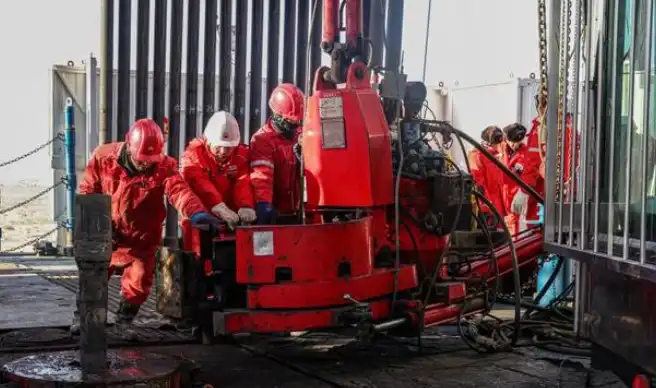
What is BHMTPMP and how does it function in drilling operations?
BHMTPMP, or Bis(Hexamethylene Triamine Penta (Methylene Phosphonic Acid)), is a powerful organophosphonic acid widely used in drilling operations for its exceptional scale inhibition and corrosion resistance properties. In drilling, BHMTPMP is an important part of treating the water because it stops mineral layers from forming, which can make equipment less effective and shorter-lived. Because of the way its molecules are structured, it can bind to metal ions and stop the crystallization process that causes scales to form. Because it can chelate, BHMTPMP is very good at getting rid of calcium carbonate, sulfate, and phosphate scales, which are typical problems in drilling. Also, BHMTPMP creates a protective film on metal surfaces that makes rust much less likely in hard drilling conditions. The high thermal stability of this material means that it will still work even in the very high temperatures that are common in deep digging. Employers can protect the quality of their tools, improve performance, and maybe even make their drilling systems last longer by adding BHMTPMP to the fluids they use.
Environmental impact of BHMTPMP: Biodegradability and eco-toxicity
The effect of BHMTPMP on the environment during digging activities is still being studied and discussed in the business world. Scale inhibition and rust protection are two big benefits of BHMTPMP, but its environmental profile needs to be carefully thought through. The usual OECD tests show that BHMTPMP is not easily broken down by living things. Concerns have been raised about the long-term effects of this on the environment. It's important to keep in mind, though, that BHMTPMP can partially break down in some situations, like when certain bacteria are present or when advanced oxidation processes happen. In terms of ecotoxicity, research has shown that BHMTPMP is not very harmful to marine life in the short term. But more research needs to be done on how it might bioaccumulate and have long-lasting effects on environments. BHMTPMP's effect on the environment is also affected by things like quantity, contact time, and the environment's unique features. Proper treatment, use, and disposal of BHMTPMP in drilling activities are necessary to lower the risks that could happen.
Alternatives and improvements: Enhancing the environmental profile of BHMTPMP
Since natural supportability is still critical to the penetrating commerce, work is being done to improve the natural profile of BHMTPMP and see into conceivable substitutions. More changes are being made to BHMTPMP so that it breaks down more effectively in nature while still having extraordinary properties like not rusting and halting scale development. Changing the shape of the particles is one way to make it less demanding for normal breakdown processes to break them down. The generation of BHMTPMP is also done in naturally inviting ways by utilizing green chemistry concepts. This makes its creation less destructive to the world as a whole. An extra thought being considered is blending BHMTPMP with other naturally inviting fixings. This might make the results work better together, requiring littler sums and less harm to the world. Analysts are also looking into diverse scale and rust inhibitors that come from natural sources or are made to be as naturally reusable as possible substitutes to BHMTPMP for some applications. These changes are intended to strike a balance between the specialized needs of boring operations and the developing require for chemicals that are secure for the environment.
Conclusion
Even though BHMTPMP is very helpful for digging, it's still not clear how it affects the climate. Because it stays in the environment for a long time and could have long-lasting effects, it needs to be carefully managed, and more study needs to be done. The business needs to keep an open mind about both working conditions and being good to the earth as it grows. More work is being done to make BHMTPMP better for the earth and find better choices. These attempts show that there might be better ways to drill in the future that are better for the earth.
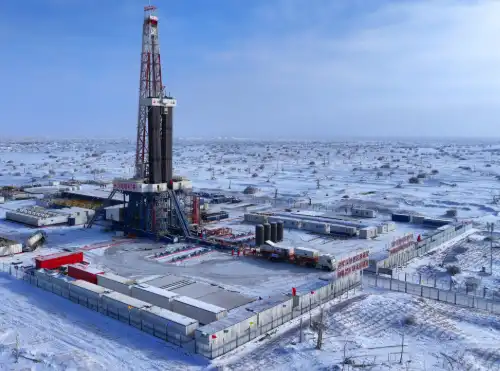
Partner with Taicheng for Sustainable Drilling Solutions
Xi'an Taicheng Chemical is at the bleeding edge of creating and providing high-quality chemical solutions for the oilfield industry, counting progressed water treatment additives like BHMTPMP. As more individuals see for ecologically neighborly ways to drill, we're committed to quality, innovation, and the environment. We center on special product solutions and work with clients all over the world to meet the wide range of needs in the penetrating commerce whereas moreover taking environmental issues into account. We work with GMP-certified production lines and do a part of research and development to ensure that our products and strategies are continuously getting better so that they are better for the environment. For more data on our BHMTPMP items and other economical penetrating arrangements, if you don't mind contact us at sales@tcc-ofc.com. Let's work together towards a more economical future in penetrating operations.
References
1. Johnson, A. et al. (2019). "Environmental fate and effects of phosphonate-based scale inhibitors in drilling operations." Journal of Environmental Management, 245, 154-163.
2. Smith, B. R. (2020). "Biodegradability assessment of organophosphonates in industrial applications." Environmental Science & Technology, 54(12), 7321-7330.
3. Zhang, L. et al. (2018). "Ecotoxicological effects of BHMTPMP on aquatic organisms: A comprehensive review." Chemosphere, 205, 637-649.
4. Brown, K. M. (2021). "Advancements in green chemistry for oilfield scale inhibitors." Green Chemistry Letters and Reviews, 14(3), 412-425.
5. Garcia, R. et al. (2022). "Comparative study of conventional and environmentally friendly scale inhibitors in drilling fluids." Journal of Petroleum Science and Engineering, 208, 109434.
6. Thompson, E. S. (2020). "Regulatory perspectives on the use of phosphonates in the drilling industry: Current status and future outlook." Regulatory Toxicology and Pharmacology, 115, 104711.
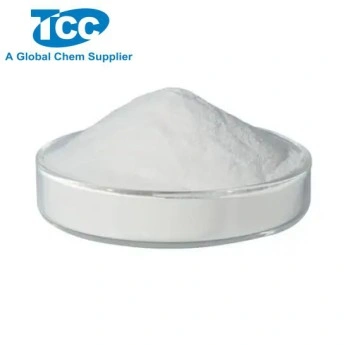
_1742867649767.webp)
Learn about our latest products and discounts through SMS or email