- English
- French
- German
- Portuguese
- Spanish
- Russian
- Japanese
- Korean
- Arabic
- Greek
- German
- Turkish
- Italian
- Danish
- Romanian
- Indonesian
- Czech
- Afrikaans
- Swedish
- Polish
- Basque
- Catalan
- Esperanto
- Hindi
- Lao
- Albanian
- Amharic
- Armenian
- Azerbaijani
- Belarusian
- Bengali
- Bosnian
- Bulgarian
- Cebuano
- Chichewa
- Corsican
- Croatian
- Dutch
- Estonian
- Filipino
- Finnish
- Frisian
- Galician
- Georgian
- Gujarati
- Haitian
- Hausa
- Hawaiian
- Hebrew
- Hmong
- Hungarian
- Icelandic
- Igbo
- Javanese
- Kannada
- Kazakh
- Khmer
- Kurdish
- Kyrgyz
- Latin
- Latvian
- Lithuanian
- Luxembou..
- Macedonian
- Malagasy
- Malay
- Malayalam
- Maltese
- Maori
- Marathi
- Mongolian
- Burmese
- Nepali
- Norwegian
- Pashto
- Persian
- Punjabi
- Serbian
- Sesotho
- Sinhala
- Slovak
- Slovenian
- Somali
- Samoan
- Scots Gaelic
- Shona
- Sindhi
- Sundanese
- Swahili
- Tajik
- Tamil
- Telugu
- Thai
- Ukrainian
- Urdu
- Uzbek
- Vietnamese
- Welsh
- Xhosa
- Yiddish
- Yoruba
- Zulu
Can Welan Gum Reduce Non-Productive Time in Drilling Projects?
Yes, sophisticated rheological modifiers such as Welan Gum may help minimise non-productive time in drilling operations by enhancing the performance of the drilling fluid under difficult downhole circumstances. “This microbial biopolymer improves viscosity control, cuttings suspension, and wellbore stability – all important factors in reducing operational delays. Consistent rheological qualities at severe temperatures and high shear rates in drilling fluids result in a significant reduction in equipment failures and blocked pipe events. From industry experience, operators who include high-performance biopolymers into their fluid systems enjoy fewer interruptions, which has a direct correlation to cost savings and better project schedules.

Welan Gum Fundamentals: Properties and Performance in Drilling Fluids
Molecular Structure and Unique Characteristics
This anionic exopolysaccharide with high molecular weight is obtained via aerobic fermentation of bacteria of the genus Alcaligenes. The resultant biopolymer is made up of repeated tetrasaccharide units comprising D-glucose, D-glucuronic acid, L-rhamnose, and L-mannose. The chemical architecture gives rise to hydrogen bonding between glycoside rings throughout the polymer chain, resulting in excellent thickening ability and three-dimensional network formation in aqueous solutions. This biosaccharide, sometimes known as Brunei gum, is stable in a broad pH range (2-13) and performs well in high salinity conditions where many synthetic polymers fail.
Superior Rheological Performance
This Welan Gum biopolymer is a viscosity rheological modifier obtained from fermented microbial powder and shows exceptional pseudoplasticity, that is to say, high viscosity at low shear rate and flowability at high shear rate. This shear-thinning property is very useful in drilling operations. Higher low shear viscosity readily suspends cuttings and avoids settling when circulation pumps are stopped. The lower apparent viscosity while active pumping permits effective fluid flow through drillstrings and annular space. The material has operational viscosity at temperatures up to 150°C, much beyond conventional xanthan-based systems, which break down quickly at 120°C.
Regulatory Compliance and Safety Profile
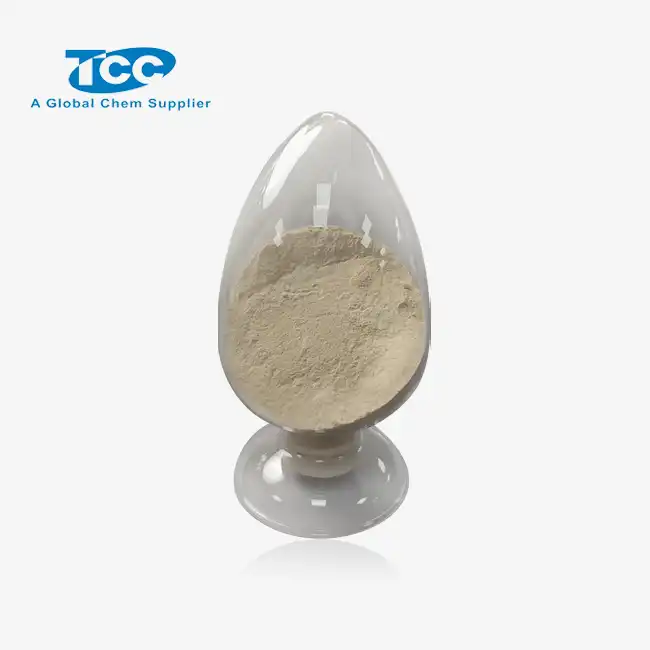
Global oil and gas applications will have to continue meeting strict safety and environmental norms. The biopolymer produced by fermentation is an ecologically acceptable addition with a low ecological footprint in comparison with synthetic ones. The off-white to tan powder (CAS No. 96949-22-3) has steady performance characteristics and has a purity of more than 98%. Operators may be compliant in several countries thanks to extensive documentation from manufacturers that includes Certificates of Analysis (COA), Material Safety Data Sheets (MSDS), and regulatory assistance. ISO9000 certified, Xi'an TaiCheng Chem Co., Ltd. means that quality control systems are in place throughout the whole manufacturing process that satisfy international standards.
How Welan Gum Works to Reduce Non-Productive Time
Mechanisms of Enhanced Cuttings Transport
When dispersed in drilling fluids, this biopolymer creates a three-dimensional network structure that radically affects the mechanics of suspension. Individual particles are trapped inside the gel-like matrix, avoiding any gravitational settling even after circulation is stopped. This feature immediately minimises the instances of pipe sticking due to cuttings buildup. The increased capacity is advantageous in the effective removal of drilled solids and formation debris in unstable formations that tend to slough. Operators are seeing cleaner wellbores and fewer remedial circulation sweeps when utilising appropriately prepared solutions, including this sophisticated rheological agent.
Thermal Stability Under Downhole Conditions
Drilling fluids in deep wells and geothermal conditions are subjected to severe temperatures that quickly break down traditional polymers. Laboratory research shows that solutions of this microbial biopolymer retain their viscosity characteristics despite extended exposure to temperatures as high as 150°C. This thermal resistance equates to operational dependability – fluids will continue to do what they are supposed to accomplish regardless of downhole temperature surges. Reduced thermal deterioration provides less need for mid-operation modifications of fluid properties, hence minimising circulation interruptions that lead to NPT. Its durability in high calcium conditions avoids precipitation concerns that other biopolymers have when combined with cement-contaminated fluids.
Documented Performance in Field Applications
Many case studies from upstream operators support the NPT reduction potential. An operator drilling in the Gulf of Mexico at 15,000 feet reported a 23% decrease in circulation-related delays after switching to formulations using this high-performance biopolymer. Another Permian Basin operator said it was able to eliminate three blocked pipe instances during a six-well program by better controlling low-shear-rate viscosity. These real-world outcomes are a consequence of enhanced rheological consistency – when fluid parameters are predictable and consistent, drilling crews are not faced with reactive issue resolution, which may take time away from productive operations. The cost savings from averted NPT are typically 5 to 10 times the increased investment in premium additives.
Comparative Analysis: Welan Gum vs Other Hydrocolloids in Drilling
Performance Comparison with Xanthan Gum
Xanthan gum dominates conventional drilling fluid formulations due to its widespread availability and reasonable cost. Yet this traditional choice demonstrates clear limitations under demanding conditions. Xanthan-based systems experience significant viscosity loss above 120°C, requiring frequent property adjustments or complete fluid replacements in hot wells. The material also exhibits sensitivity to calcium contamination, causing precipitation when cement enters the wellbore. In contrast, Welan Gum maintains functionality at temperatures up to 150°C and performs reliably in high-calcium environments. This enhanced stability translates into more consistent hole cleaning and reduced formation damage risk across a wider range of operational scenarios.
Advantages Over Guar Gum Systems
Guar gum offers a natural origin and low cost, making it attractive for budget-conscious operators. The polysaccharide's rheological profile, however, creates operational challenges. Guar-thickened fluids often develop excessive apparent viscosity, increasing pump pressure requirements and reducing penetration rates. The material also demonstrates poor thermal stability and susceptibility to bacterial degradation in storage. Advanced biopolymer alternatives provide superior shear-thinning characteristics—delivering necessary suspension at rest while maintaining pumpability during circulation. The balanced performance profile enables formulation flexibility that guar-based systems cannot achieve without complex additive packages and frequent property monitoring.
Economic Considerations and Value Proposition
Premium drilling fluid additives command higher unit prices than commodity alternatives, prompting procurement teams to scrutinize cost-effectiveness carefully. The evaluation must extend beyond material costs to encompass total drilling economics. A 0.1% dosage (by weight of water) of high-performance biopolymer typically adds $2-4 per barrel to fluid costs. If this investment prevents a single four-hour NPT incident, the resulting savings—accounting for rig rates, personnel costs, and schedule delays—exceed $50,000 on average. Over the duration of a multi-well drilling program, the cumulative NPT reduction and improved operational efficiency generate returns that dwarf the incremental additive expense.
Procurement and Application Considerations for Welan Gum in Drilling Projects
Supplier Selection and Quality Verification
Getting this particular rheology modifier calls for rigorous examination of suppliers to assure product consistency and dependability. Procurement managers should seek manufacturers with demonstrated quality systems, and ISO9000 accreditation is a basic sign of systematic quality control. Request technical datasheets including viscosity profiles, thermal stability test results, and compatibility data with common drilling fluid components. Sample testing is a must before high volume commitments. Good vendors will provide you samples (usually within a 7 to 10-day lead time) for testing in the lab to be sure the material performs for your particular application.
Formulation Customization for Operational Conditions
Drilling settings vary widely in temperature, pressure, salinity, and formation properties. For these settings, an appropriate selection and dose of a rheological modifier may maximise operational advantages, while limiting costs. For instance, shallow freshwater drilling may need just a 0.05% dose. A deep hot well with high salinity strata may need 0.15% for good performance. Xi’an TaiCheng Chem Co., Ltd provides two kinds of products (3810 and 4810) to meet various operating needs and provides technical assistance for formulation development. Early supplier involvement in project planning allows for the creation of tailor-made solutions for efficiently addressing unique geological and operational issues.
Packaging, Logistics, and Technical Support
Efficient supply chain management guarantees that materials are available when drilling operations need them. Standard packing is in 25kg bags with palletisation for easy handling and storage at rig locations. Check the supplier’s capability to meet delivery deadlines. Established manufacturers have inventory buffers and logistical networks for worldwide operations. Along with the product delivery, technical assistance is also crucial throughout the application. “Availability of experts who can help with mixing procedures, troubleshoot compatibility, and optimise performance unlocks the full capabilities of advanced additive technologies for drilling teams. Responsive after-sales service is what separates reputable partners from simple product providers.
Conclusion
Evidence from molecular research, laboratory testing and field application shows that modern Welan Gum biopolymer rheological modifiers cut non-productive time significantly in drilling operations. Fundamental fluid performance difficulties lead to significant operating delays. Microbial fermentation-produced additives have unique properties: outstanding temperature stability, shear-responsive, high-volume, and extensive chemical compatibility. Operators with gains from investments in premium additives that provide enhanced drilling efficiency, lower equipment risk, and faster project execution. As drilling targets increase deeper and hotter, the differences in performance between conventional and advanced fluid systems will become more apparent, and deliberate additive selection will become more crucial to economic success.
FAQ
1. Is This Biopolymer Compatible with All Drilling Fluid Types?
The material demonstrates excellent compatibility with water-based mud systems, including freshwater, seawater, and high-salinity brines. It functions effectively in both bentonite-based and polymer-based formulations. Compatibility with synthetic-based and oil-based muds requires specific testing, as the aqueous dispersion mechanism differs fundamentally in non-aqueous systems. The additive works synergistically with common components, including barite weighting agents, fluid loss control polymers, and most surfactant packages. Potential incompatibilities may arise with certain cationic additives; laboratory testing confirms compatibility before field application.
2. How Does It Impact Overall Fluid System Costs?
Typical dosage ranges of 0.05-0.15% by weight of water translate to material costs of $2-6 per barrel of drilling fluid, depending on market pricing and volume commitments. This represents a modest increase compared to conventional polymer systems. The cost impact must be evaluated against performance benefits—reduced NPT, improved penetration rates, and extended fluid life — all contribute to a favorable total cost of ownership. Projects experiencing significant NPT challenges often find that premium additives generate ten-fold returns through operational improvements alone.
3. What Certifications Ensure Quali,ty and Compliance?
Reliable suppliers provide Certificates of Analysis documenting purity levels, viscosity specifications, and microbial quality for each production lot. ISO9000 certification indicates systematic quality management throughout manufacturing. For offshore and environmentally sensitive locations, verify that products meet regional regulations—many jurisdictions require environmental impact assessments for drilling fluid components. Material Safety Data Sheets provide handling and disposal guidance, ensuring workplace safety compliance.
Partner with Taicheng fotemperature-Performance Drilling Fluid Solutions
Xi'an TaiCheng Chem Co., Ltd specializes in supplying premium-grade rheological modifiers to oil and gas operators worldwide. As an established Welan Gum supplier with ISO9000 certification and proven expertise in oilfield chemicals, we deliver the quality, consistency, and technical support your drilling projects demand. Our product range includes both 3810 and 4810 types, available in convenient 25kg bags with flexible bulk purchasing options. We understand the critical importance of minimizing non-productive time—our team provides complimentary sample testing, customized formulation guidance, and responsive technical assistance throughout your project lifecycle. Contact our specialists at sales@tcc-ofc.com to request product specifications, samples, and a consultation on optimizing your drilling fluid performance. Let Taicheng become your trusted partner in achieving operational excellence and cost-effective drilling solutions.

References
1. Caenn, R., Darley, H.C.H., and Gray, G.R. (2017). Composition and Properties of Drilling and Completion Fluids (7th ed.). Gulf Professional Publishing.
2. Mitchell, R.F. and Miska, S.Z. (2011). Fundamentals of Drilling Engineering. Society of Petroleum Engineers.
3. Bourgoyne, A.T., Millheim, K.K., Chenevert, M.E., and Young, F.S. (1991). Applied Drilling Engineering. Society of Petroleum Engineers Textbook Series.
4. Amanullah, M. and Yu, L. (2005). Environment-friendly fluid loss additives to protect the marine environment from the detrimental effects of mud additives. Journal of Petroleum Science and Engineering, 48(3-4), 199-208.
5. Fink, J.K. (2015). Petroleum Engineer's Guide to Oil Field Chemicals and Fluids (2nd ed.). Gulf Professional Publishing.
6. Tehrani, A., Young, S., Gerrard, D., and Fernandez, J. (2009). Environmentally friendly water-based fluid for HT/HP drilling. SPE International Symposium on Oilfield Chemistry, Society of Petroleum Engineers Paper SPE-121783-MS.
Learn about our latest products and discounts through SMS or email