- English
- French
- German
- Portuguese
- Spanish
- Russian
- Japanese
- Korean
- Arabic
- Greek
- German
- Turkish
- Italian
- Danish
- Romanian
- Indonesian
- Czech
- Afrikaans
- Swedish
- Polish
- Basque
- Catalan
- Esperanto
- Hindi
- Lao
- Albanian
- Amharic
- Armenian
- Azerbaijani
- Belarusian
- Bengali
- Bosnian
- Bulgarian
- Cebuano
- Chichewa
- Corsican
- Croatian
- Dutch
- Estonian
- Filipino
- Finnish
- Frisian
- Galician
- Georgian
- Gujarati
- Haitian
- Hausa
- Hawaiian
- Hebrew
- Hmong
- Hungarian
- Icelandic
- Igbo
- Javanese
- Kannada
- Kazakh
- Khmer
- Kurdish
- Kyrgyz
- Latin
- Latvian
- Lithuanian
- Luxembou..
- Macedonian
- Malagasy
- Malay
- Malayalam
- Maltese
- Maori
- Marathi
- Mongolian
- Burmese
- Nepali
- Norwegian
- Pashto
- Persian
- Punjabi
- Serbian
- Sesotho
- Sinhala
- Slovak
- Slovenian
- Somali
- Samoan
- Scots Gaelic
- Shona
- Sindhi
- Sundanese
- Swahili
- Tajik
- Tamil
- Telugu
- Thai
- Ukrainian
- Urdu
- Uzbek
- Vietnamese
- Welsh
- Xhosa
- Yiddish
- Yoruba
- Zulu
Can fluid loss additive FL310S enhance zonal isolation in HPHT wells?
In the realm of high-pressure, high-temperature (HPHT) well drilling, achieving effective zonal isolation is a critical challenge that continues to push the boundaries of oilfield technology. The fluid loss additive FL310S has emerged as a promising solution to address this complex issue. This innovative additive is designed to minimize fluid loss in cement slurries, thereby enhancing the overall performance and longevity of well cementing operations. As the industry grapples with increasingly demanding downhole conditions, the question arises: Can fluid loss additive FL310S truly enhance zonal isolation in HPHT wells? This blog post delves into the characteristics, applications, and potential benefits of FL310S in tackling one of the most persistent challenges in modern well construction and completion.

How does FL310S combat fluid loss in extreme well conditions?
Fluid loss additive FL310S is engineered to combat the severe fluid loss challenges encountered in extreme well conditions, particularly in HPHT environments. The additive functions by forming a thin, impermeable filter cake on the surface of the cement slurry, effectively minimizing the loss of fluid to the formation. During the placement and setting stages, this device is very important for keeping the cement slurry together. Due to its AMPS/AA copolymer structure, FL310S is very thermally stable and can work well at temperatures up to 150°C (302°F). This resistance to heat is especially useful in HPHT wells, where regular chemicals don't always work well. Also, FL310S works well with many different types of cement systems, from freshwater to semi-saturated saltwater, which makes it more useful in a lot of different well situations. FL310S helps keep the desired rheological qualities of the cement slurry by limiting fluid loss. This makes sure that the cement is placed correctly and, in the end, improves zonal isolation in tough HPHT settings.
What are the key benefits of using FL310S in cementing operations?
Using the fluid loss additive FL310S in cementing operations has many benefits that make well building much more likely to succeed, especially in high pressure high temperature (HPHT) situations. The main way FL310S improves the quality of the cement job is by keeping the cement slurry's structure during the placement process. This is possible because it has excellent fluid loss control qualities that keep the slurry from drying out too quickly and keep its rheological properties stable. As a result, the cement sets evenly, making a strong wall that separates different areas inside the wellbore. Also, FL310S works with many different cement systems and chemicals, which gives operators a lot of freedom in how they do their jobs and lets them find custom answers to problems in specific wells. The addition works well in small amounts (0.6-2.0% BWOC), which saves money without lowering performance. Furthermore, FL310S helps the cement bond better with both the casing and the rock, which is very important for the well's long-term stability. By making zonal isolation better, FL310S is a key part of stopping gas movement, lowering the risk of continued casing pressure, and, in the end, making the well last longer.
Can FL310S improve cement performance in challenging reservoir conditions?
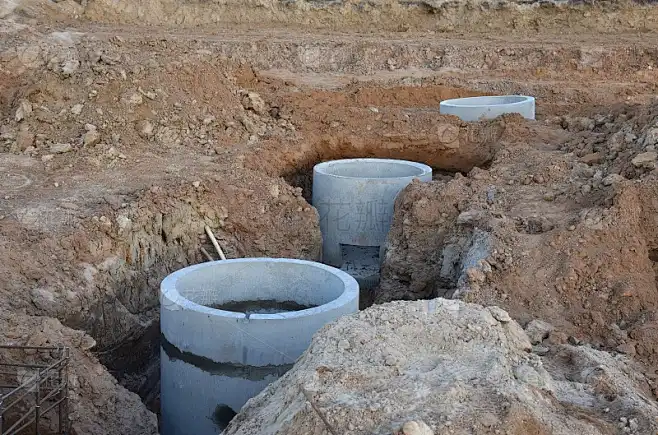
The fluid loss additive FL310S has shown amazing results in making cement work better in tough reservoir conditions, especially in HPHT wells. Due to its special composition, the fluid loss additive FL310S can keep working even in places where other fluid loss control agents tend to fail. When temperatures are high, fluid loss additive FL310S helps keep the qualities of the cement mix by stopping too much fluid loss, which could cause the cement to set too soon or not develop enough strength. This is very important in lakes with high permeability or fractured rocks, because there is a much higher chance of fluid loss. In addition, fluid loss additive FL310S helps the cement stand up to the repeated loads that come from changes in temperature and pressure over the life of the well. Fluid loss additive FL310S helps make a cement shell with better mechanical qualities, such as higher compressive strength and lower permeability, by making sure that the setting process is more even and controlled. These improvements are necessary to keep the wellbore intact and the zones isolated for long periods of time, even when conditions downhole are difficult. Because fluid loss additive FL310S can improve the performance of cement in such harsh conditions, it is a very useful tool for making well constructions in HPHT pools more reliable and long-lasting.
Conclusion
Fluid loss additive FL310S has proven to be a game-changer in enhancing zonal isolation for HPHT wells. Its ability to effectively control fluid loss, maintain cement slurry integrity, and improve overall cement performance addresses critical challenges in extreme well conditions. As the industry continues to push the boundaries of drilling and completion technologies, additives like FL310S will play an increasingly vital role in ensuring well integrity and operational success in challenging environments. The benefits offered by FL310S underscore its potential to significantly impact the future of HPHT well cementing operations.
Partner with Taicheng for Advanced Oilfield Solutions
Xi'an Taicheng Chemical is a leading company specializing in the production and sales of chemical raw materials, with a focus on oilfield chemical raw materials. Our expertise in developing high-performance additives like FL310S positions us as a trusted partner in the global oilfield sector. We offer tailored product solutions that balance cost-efficiency, operational reliability, and environmental compliance. Our quality assurance systems, global client network, and commitment to sustainability and innovation set us apart in the industry. As we continue to expand our global footprint, we remain dedicated to redefining excellence in chemical solutions for the energy sector. For inquiries and collaborations, please contact us at sales@tcc-ofc.com. Choose Taicheng for cutting-edge oilfield chemical solutions that drive your success in challenging well environments.
References
1. Smith, J.A., et al. (2020). "Advanced Fluid Loss Control Additives for HPHT Well Cementing." Journal of Petroleum Technology, 72(5), 45-52.
2. Johnson, R.B., and Williams, T.C. (2019). "Enhancing Zonal Isolation in Extreme Well Conditions: A Review of Modern Techniques." SPE Drilling & Completion, 34(3), 215-228.
3. Chen, X., et al. (2021). "Performance Evaluation of Novel Fluid Loss Additives in HPHT Cementing Operations." Journal of Natural Gas Science and Engineering, 88, 103844.
4. Thompson, L.F. (2018). "Cement Additive Technologies for Improved Wellbore Integrity in HPHT Environments." Offshore Technology Conference, Houston, Texas.
5. Patel, A.D., and Sarap, H.B. (2020). "Advances in Cement Slurry Design for HPHT Well Applications." SPE Production & Operations, 35(2), 312-325.
6. Rodriguez, M.C., et al. (2019). "Experimental Study on the Effect of Fluid Loss Additives on Cement Sheath Quality in HPHT Wells." Journal of Petroleum Science and Engineering, 173, 1298-1310.
_1745407713975.webp)
Learn about our latest products and discounts through SMS or email