- English
- French
- German
- Portuguese
- Spanish
- Russian
- Japanese
- Korean
- Arabic
- Greek
- German
- Turkish
- Italian
- Danish
- Romanian
- Indonesian
- Czech
- Afrikaans
- Swedish
- Polish
- Basque
- Catalan
- Esperanto
- Hindi
- Lao
- Albanian
- Amharic
- Armenian
- Azerbaijani
- Belarusian
- Bengali
- Bosnian
- Bulgarian
- Cebuano
- Chichewa
- Corsican
- Croatian
- Dutch
- Estonian
- Filipino
- Finnish
- Frisian
- Galician
- Georgian
- Gujarati
- Haitian
- Hausa
- Hawaiian
- Hebrew
- Hmong
- Hungarian
- Icelandic
- Igbo
- Javanese
- Kannada
- Kazakh
- Khmer
- Kurdish
- Kyrgyz
- Latin
- Latvian
- Lithuanian
- Luxembou..
- Macedonian
- Malagasy
- Malay
- Malayalam
- Maltese
- Maori
- Marathi
- Mongolian
- Burmese
- Nepali
- Norwegian
- Pashto
- Persian
- Punjabi
- Serbian
- Sesotho
- Sinhala
- Slovak
- Slovenian
- Somali
- Samoan
- Scots Gaelic
- Shona
- Sindhi
- Sundanese
- Swahili
- Tajik
- Tamil
- Telugu
- Thai
- Ukrainian
- Urdu
- Uzbek
- Vietnamese
- Welsh
- Xhosa
- Yiddish
- Yoruba
- Zulu
Zinc chloride
CAS No.:7646-85-7
Standard: GB1625-79
Assay: Min 98% Anhydrous Zinc Chloride
Packing : 25kg/bag
Function:Dehydrating agent, catalyst, analytical reagent, pharmaceutical raw material, textile mordant, cosmetic astringent & antibacterial agent
High-Purity Zinc Chloride 98% - Industrial Grade Dehydrating Agent & Catalyst Solution
With a minimum assay of 98% anhydrous content and in compliance with GB1625-79 requirements, Xi'an TaiCheng Chem Co., Ltd. (TCC), founded in 2012, supplies premium-grade zinc chloride (CAS 7646-85-7). Pharmaceutical, textile, and chemical catalysis operations benefit from our industrial-grade formulation. After almost a decade in speciality chemical manufacture, TCC maintains quality through stringent raw material selection and process control. A versatile dehydrating agent, catalyst, and analytical reagent, our product performs well in moisture-sensitive processes and demanding industrial applications that need purity and dependability.
What is Zinc Chloride?
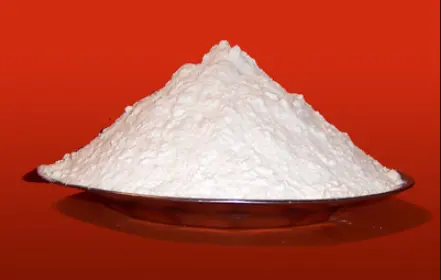
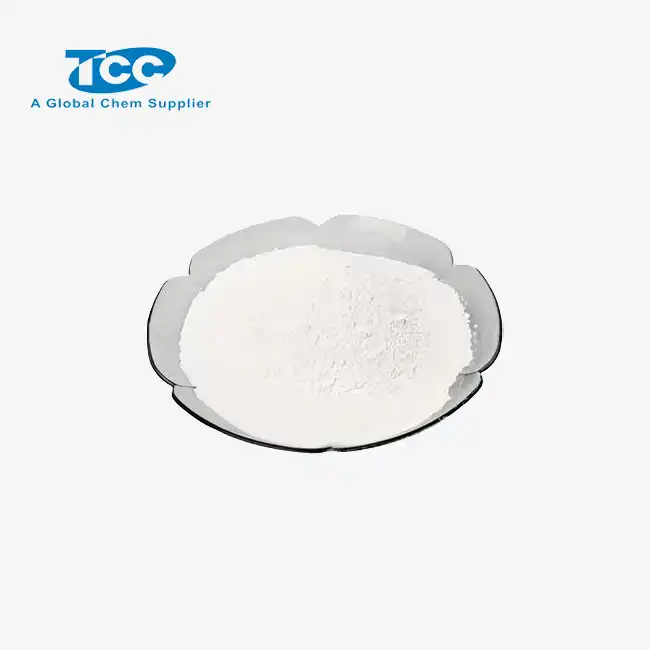
Zinc chloride is an inorganic chemical with significant hygroscopicity and water and alcohol solubility. ZnCl₂, a white crystalline powder, has high moisture-absorbing characteristics.
Electron-accepting Lewis acid catalysts like this chemical aid organic synthesis. It may dehydrate organic molecules and act as a metallurgical flux due to its unusual chemical composition.
Technical Specifications
| Parameter | Specification |
|---|---|
| Product Name | Zinc Chloride (Anhydrous) |
| CAS Number | 7646-85-7 |
| Standard | GB1625-79 |
| Assay (ZnCl₂ Content) | Min 98.0% |
| Appearance | White crystalline powder/granules |
| Water Insoluble Matter | ≤0.05% |
| Sulfate (SO₄) | ≤0.05% |
| Heavy Metals (as Pb) | ≤0.001% |
| Molecular Weight | 136.30 g/mol |
| Solubility | 432 g/100 mL (25°C) in water |
Core Applications & Industry Solutions
Pharmaceutical Raw Material
You need purity and reliability in pharmaceutical production. Antibiotic and pharmaceutical chemical synthesis depend on our high-quality product. Low heavy metal level (<0.001% Pb) assures pharmacopoeia compliance and prevents contamination in active medicinal substances.
Dehydrating Agent in Organic Synthesis
In moisture-sensitive processes, trace water can lower yields and quality. It effectively dehydrates organic molecules, alcohols, and ether systems. Water molecules bind to it, protecting reaction routes from hydrolysis and ensuring chemical stability at different temperatures.
Chemical Catalysis
It speeds Friedel-Crafts alkylation, esterification, and polymerisation as a Lewis acid catalyst. Increased reaction rates and processing speeds boost manufacturing efficiency. Some closed-loop systems reuse the catalyst, lowering operational expenses.
Textile Processing & Mordant
Excellent dye fixing benefits textile makers. It mordantes cotton, linen, and rayon by bonding fibre molecules and dye particles. More vibrant colours, better wash-fastness, and less dye waste in effluent streams and
Analytical Laboratory Reagent
For proper testing, analytical labs need reliable reagents. Our product satisfies qualitative and quantitative analysis, metal detection, and chemical research expectations. Less than 0.05% water-insoluble materials precludes interference in precise measurements.
Quality Assurance & Manufacturing Excellence
Automation monitors quality in TCC's modern production facilities. All production batches undergo multi-stage assay verification, impurity profiling, and physical property validation.
Atomic absorption spectroscopy and titration determine heavy metal assays in our quality control lab. This thorough technique assures batch-to-batch uniformity and traceability.
Through our production chain, we follow GMP. Starting with raw material acquisition and ending with packing, defined processes avoid contamination concerns and preserve product integrity.
Storage & Handling Recommendations
Proper storage is essential for product quality due to its hygroscopic nature. In dry, well-ventilated warehouses, store in well sealed containers.
Keep containers away from water and strong bases and reactive metals. Storing at 15-30°C with relative humidity below 60% is recommended.
Protect yourself with chemical-resistant gloves, goggles, and dust masks. Add product to water gently while stirring, never water to product. Dissolution creates heat.
Packaging Options
Our industrial-standard packaging is safe and easy to handle:
- Weaved polypropylene bags with polyethylene liners hold 25 kg.
- Packaging: Moisture-proof bags
- Pallet system for container shipping
- On-demand custom packaging for big orders
UN 2331 corrosive substance shipping standards apply to all containers.
FAQ
Q1: Why does the product occasionally get damp or lumpy in storage?
A: When exposed to air, the chemical quickly absorbs atmospheric moisture. Short-term exposure during container opening can hydrate. To avoid recurrent exposure, reseal containers quickly and move contents to smaller containers. Using desiccant packets in storage enhances moisture protection.
Q2: What concentration is best for textile mordants?
A: Mordant bath concentrations are usually 2–5% of cloth weight. Starting with 3% for cotton and linen, modify for dye type and colour intensity. To avoid spots and guarantee equal distribution, dilute the ingredient in warm water before adding clothes.
Q3: Can food-grade applications utilise this product?
A: Not food-grade, our formulation passes industrial GB1625-79 requirements. For food contact, you need pharmaceutical or food-grade certifications and purity tests. If necessary, contact our technical staff about food-grade alternatives.
Q4: How does it compare to calcium chloride as a dehydrating agent?
A: Both are good desiccants, but this molecule has greater Lewis acid characteristics, making it better for organic synthesis with catalytic activity. Simple moisture removal in non-reactive situations is cheaper using calcium chloride. You can choose catalytic dehydration or not.
Q5: Handling this chemical requires what safety gear?
A: PPE is required: chemical-resistant nitrile gloves, safety goggles with side shields, dust respirator (N95 minimum), and skin-protective clothes. Maintain workroom ventilation. Keep eyewash and safety showers open. Corrosive substance can burn skin and harm eyes.
Contact Us
Ready to optimize your chemical processes with reliable Zinc chloride supply? Contact us today at sales@tcc-ofc.com for quotations, product samples, or technical consultation.
Learn about our latest products and discounts through SMS or email