- English
- French
- German
- Portuguese
- Spanish
- Russian
- Japanese
- Korean
- Arabic
- Greek
- German
- Turkish
- Italian
- Danish
- Romanian
- Indonesian
- Czech
- Afrikaans
- Swedish
- Polish
- Basque
- Catalan
- Esperanto
- Hindi
- Lao
- Albanian
- Amharic
- Armenian
- Azerbaijani
- Belarusian
- Bengali
- Bosnian
- Bulgarian
- Cebuano
- Chichewa
- Corsican
- Croatian
- Dutch
- Estonian
- Filipino
- Finnish
- Frisian
- Galician
- Georgian
- Gujarati
- Haitian
- Hausa
- Hawaiian
- Hebrew
- Hmong
- Hungarian
- Icelandic
- Igbo
- Javanese
- Kannada
- Kazakh
- Khmer
- Kurdish
- Kyrgyz
- Latin
- Latvian
- Lithuanian
- Luxembou..
- Macedonian
- Malagasy
- Malay
- Malayalam
- Maltese
- Maori
- Marathi
- Mongolian
- Burmese
- Nepali
- Norwegian
- Pashto
- Persian
- Punjabi
- Serbian
- Sesotho
- Sinhala
- Slovak
- Slovenian
- Somali
- Samoan
- Scots Gaelic
- Shona
- Sindhi
- Sundanese
- Swahili
- Tajik
- Tamil
- Telugu
- Thai
- Ukrainian
- Urdu
- Uzbek
- Vietnamese
- Welsh
- Xhosa
- Yiddish
- Yoruba
- Zulu
Diutan gum
CAS No.:125005-87-0
Standard: USP40
Assay:≥90% total polysaccharides (single active ingredient)
Packing :25kg/Fiber Drum
Function:Thickener, viscosity modifier & stabilizer for oilfield mud, construction VMA, food and pharmaceutical additives
Diutan Gum – High-Performance Biopolymer Thickener for Oilfield, Construction and Industrial Applications
Diutan gum, a controlled aerobic bacterial fermentation-produced high-molecular-weight anionic exopolysaccharide, is designed for harsh operating circumstances and excellent rheological performance. Xi'an TaiCheng Chem Co., Ltd. offers pharmaceutical-grade product (CAS No. 125005-87-0) fulfilling USP40 criteria with ≥90% total polysaccharides test. This specialised biopolymer solves industrial problems such viscosity deterioration at high temperatures, solid particle segregation in cementitious systems, and fluid instability in high-salinity drilling where standard thickeners fail.
Our product is trustworthy for oilfield drilling, building material viscosity-modifying agent (VMA), and pharmaceutical and food stabilisation.
Technical Specifications
| Parameter | Specification |
|---|---|
| Product Name | Diutan gum |
| CAS Number | 125005-87-0 |
| Quality Standard | USP40 |
| Assay | ≥90% total polysaccharides |
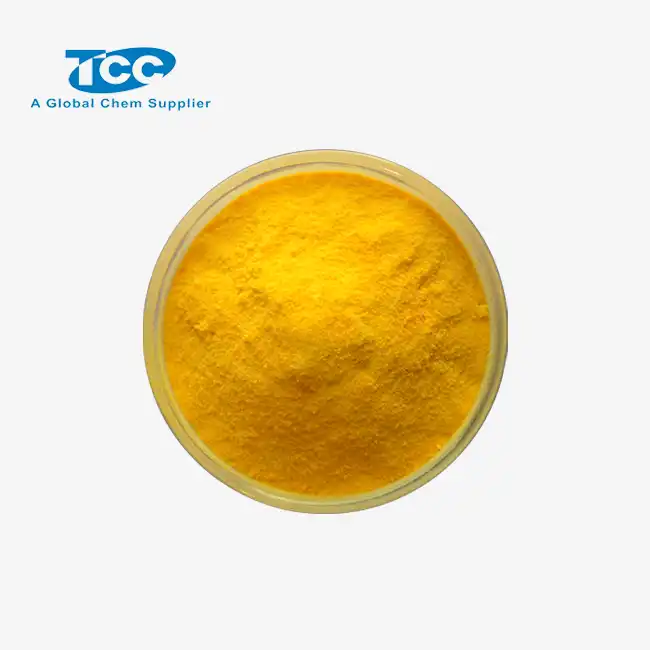
| Physical Form | Fine powder |
| Packaging | 25kg/Fiber Drum |
| Shelf Life | 24 months (stored properly) |
| Storage Conditions | Cool, dry place away from direct sunlight |
Core Functional Properties
If you put shear stress on this biopolymer, it moves very easily, even though it has a high viscosity when it's not moving. Because it is one of a kind, it is perfect for uses that need both stable support and the ability to be pumped.
Strength at High Temperatures: It keeps its useful viscosity at temperatures above 130°C, which makes it better than regular hydrocolloids for high-temperature industrial processes and digging in geothermal areas.
When it comes to ionic tolerance, it is very stable in places where there is a lot of salt and calcium. Though the chemical structure changes, the viscosity or precipitation doesn't. This is true even for rich brine solutions like those used in deep-well drilling.
Stable at pH levels between 2 and 13: It will always work the same way in both acidic and basic building materials, as it won't break down or clump together.
Primary Industrial Applications
In oilfield drilling fluids, it is a very important viscosifier and suspending agent for water-based drilling muds used in deep, hot wells. It holds drill bits in place during breaks in the circulation and keeps the shaft stable in difficult rock formations. Because the polymer doesn't break down in heat or get contaminated with salt, it is essential for offshore and geothermal drilling.
Viscosity Modifying Agents for Construction: This is the best VMA for self-compacting concrete, underwater concrete, and other specialised cementitious mixtures. It stops the separation of the aggregate and the bleeding of water while keeping the workability. The thixotropic nature makes sure that it stays stable right away after being placed, which is very important for construction that goes underwater and vertical uses.
Controlling viscosity and particle suspension in clearing processes and keeping minerals from settling in mineral slurries while they are being stored and moved are two things that industrial water treatment does.
As a stabiliser and texture modifier, it works in suspensions, emulsions, and controlled-release systems to keep the rheology stable, which is important for the effectiveness and shelf life of the product.
Competitive Performance Advantages
Unlike regular guar gum or xanthan gum, this biopolymer keeps its shape even when it is under heat, mechanical, and chemical stress at the same time. The three-dimensional network structure gives it better stability without making it seem too thick, which would make processing harder.
Effective Dosage: It achieves the desired rheological qualities at lower amounts than other hydrocolloids, which lowers the total cost of formulation while increasing performance.
Compatible: Works well with cement admixtures, dispersants, surfactants, and other additives to drilling fluids. Formulators can now make multi-component systems that work better and don't have any problems with compatibility or strange interactions.
Operational Consistency: Produces consistent performance from batch to batch, minimising changes to the recipe and differences in quality during production processes.
Quality Assurance and Manufacturing Excellence
Throughout the whole production process, Xi'an TaiCheng Chem Co., Ltd. does thorough quality control for Diutan gum. From processing of the raw materials to packing of the finished product, each batch is put through a lot of tests to make sure it meets purity standards, polysaccharide content, and viscosity performance.
Our advanced manufacturing facilities keep up a steady level of production to meet demand around the world. Adhering strictly to GMP principles makes sure that products are safe and that regulations are followed for medicinal and food-grade uses.
The research and development team at the company is always working to improve the performance of products and make new formulas that meet the needs of each individual customer.
Handling and Storage Recommendations
Keep things in cool, dry warehouses away from direct sunlight and moisture in containers that can't be opened. Caking can happen if you are exposed to high humidity for a long time. Use the right ways to keep dust from getting in while dealing.
When making solutions, slowly add the powder to the swirling water to keep it from clumping together. Complete hydration usually happens between 30 and 60 minutes, but it depends on the temperature and how hard the mixture is mixed.
Room temperature or slightly warm water (20–40°C) is best for dissolving. When you add to very hot drinks, be careful not to make the water uneven.
FAQ
Q: How does the product compare to Xanthan gum for drilling?
A: Although both are bacterial polysaccharides, the product has stronger heat stability above 130°C and performs better in high-calcium settings. This makes it better for deep-well and geothermal drilling when Xanthan gum degrades.
Q: What is the typical dosage range for construction applications?
A: Dosage ranges from 0.05% to 0.3% by weight of cementitious materials, depending on formulation. Technical help can optimise dosage for your application.
Q: Does this product meet food-grade standards?
A: Our USP40-grade material fulfils pharmaceutical requirements and can be used in food applications where local restrictions allow. Check your local regulations.
Q: What is the shelf life under proper storage conditions?
A: In sealed containers in cold, dry circumstances, the product performs as specified for 24 months from production.
Q: Do you provide customised specs or formulations?
A: Our R&D team can provide customised solutions for your operations. Contact our IT team for customisation.
Contact Us
Ready to solve your rheology challenges with Diutan gum? Contact our technical sales team at sales@tcc-ofc.com for product inquiries, application support, and customized solutions.
_1745407713975.webp)
Learn about our latest products and discounts through SMS or email